——————————
SOME EDITORIAL NOTES
Hello, new Gentle Readers, who may be coming here due to a questionable subscription to the regular blog.
Hello, previous Gentle Readers, who have with any luck traversed the internets to the magazine’s new abode after it escaped the Nonsense price hikes of certain other Patreons Platforms– and find yourselves now arrive’d on these strange new shores (with its exciting new formatting options). If you enjoyed the previous emailed issues you may subscribe again, with no cost except perhaps your sensibilities, via either this link or at the end of each issue.
Beyond that, though… well. Herein is news of the past, and news of the near future, and news of a world that might have been.
——————————
SOAP: FIT THE SEVENTH; OR, RETURN OF THE (SOAP) KING
For those who haven’t been following along, I’ve been having a nice time doing experimental archaeology and recreating cosmetics/household goods from the European Scientific Revolution AKA the 1480s to 1710s AKA very coincidentally the date range of the University of Michigan’s Early English Books Online database.
So far we’ve had successful lip balm, yet-to-be-completed Oil of Lavender, the terrible tragedies that have so far befallen the pearl face cream, and, finally, the unending journey of my own personal white whale: working AND attractive scented soap.
Did this all secretly derive from my researching period-appropriate medical horror? Yes. Am I still going to write about it? Of course come on now I can’t just keep that MEDICINAL CANNIBALISM information to myself—
But TODAY IS NOT THAT DAY.
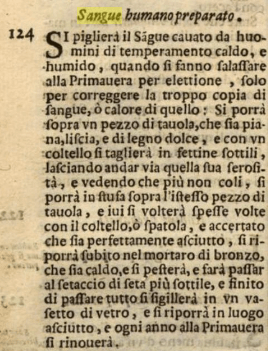
Figure 1. Someday, my beloved. Someday.
Nope, today we’re on the next iteration of the lavender soap, because we’re still at the “fuck around and find out” portion of this experimental process– and so, behold:
Version 3.0
7 oz. dried soap
4 oz. ground orrisroot
1 oz. ground whole cloves
1 oz. ground benjamin
10 drops lavender essential oil
oil of lavender, q.s.
rosewater, q.s.
You may notice that I have, tragically, only added enough of anything lavenderish to allow myself the honesty of still calling this “lavender” soap– as previously discussed, lavender essential oils (as we know them today) were not really a Thing, and the Oil of Lavender (…which is not an essential oil, but rather an infusion of lavender flowers and olive oil) is not quite ready for primetime scent vibes, so I genuinely don’t think these are comparable to actually just grinding up and shoving in the dried flowers.
But for the sake of Science, I needed to find out if removing the flowers would help with the browning issue of previous versions, so– out went the lavender. (For now.) Other changes in this version are:
- store-bought ground orrisroot (…listen, Thomas is but a wee lad, and not yet hearty enough to wreck regular orrisroot as hard as it needs);
- store-bought ground benzoin (because it was cheaper to buy in bulk that the solid resin from the metaphysical shop);
- increased the amount of orrisroot from 1 ounce to 4 ounces, in keeping with some other recipes, to try and bulk up the myristic acid content (i.e., the thing wot makes olive-oil based Nabulsi soap actually produce a bubbly lather)
I should at this point say that typically the scientific process recommends making only one change at a time when conducting Experiments, so that one may know what exactly affected a change in a positive, negative, or neutral manner.
Consider, however, that I have no patience.
So Show Us the Soap
Hold your horses, Readers. To get to the soap, you must first suffer through mortifying ordeal of process photos.

Figure 2. The ground orrisroot on my tiny digital scale (that actually measures grains,
which itself is a holdover from apothecary measurements!)
Wait wait wait actually look at my tiny nonsense scale, I love it, look at its little one-gram calibration weight:

Figure 3. A baby.

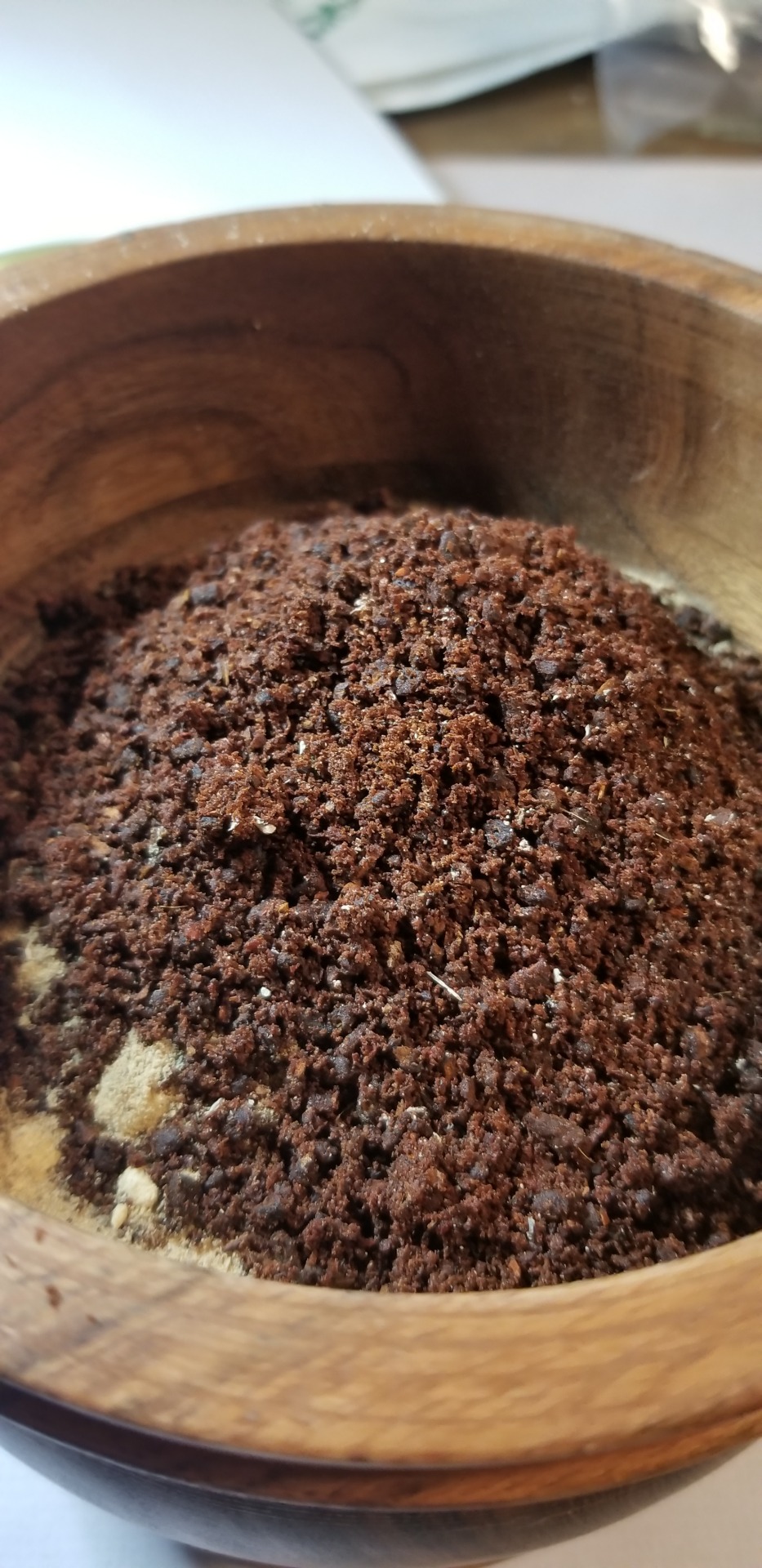
Figures 4 and 5. An ounce of whole cloves (top) and the results of young Thomas’s
efforts thrown on top of the orrisroot and benjamin in the mortar (bottom).
I should note that rather than grinding the cloves in my granite mortar and pestle first, I put them straight into Thomas’s maw– I don’t know if that led to how intensely clove-oily these grounds are, or the fact that the lavender flowers were not present to soak it up. Previously I got a grey-green powder out of grinding the both together, so this rich, wet clove-color did not bode well for my “can I stop this from being brown?” soap plans…

Figure 6. …Or maybe it’ll be fine? I added the dried soap, and now look at them all mixed together!
As a note, I had to actually use a whisk at this point rather than just rely on my pestle to do the work– my mortar is Too Small for these shenanigans, and the four ounces’ worth of orrisroot did not help matters. I won’t say how much of this mix ended up outside the mortar and on my clothes, but it was… it was a non-zero amount.
Whatever, thought I. This is Science. This is me experiencing the divine art of creation across space-time with my alchemical forebears, and also this is why I should not be allowed in other people’s kitchens.
Notably, the upped powder content meant that I had to add a lot more splashes of rosewater to get to a dough-y state where the soap could be hand-rolled, and I had to work significantly longer with the pestle– while version 2.0 was, per my notes, about 8-10 minutes’ worth of work, I would call this a solid 20 minutes at least of beating the ever-loving shit outta this mix until everything was incorporated.
And once it was, well–
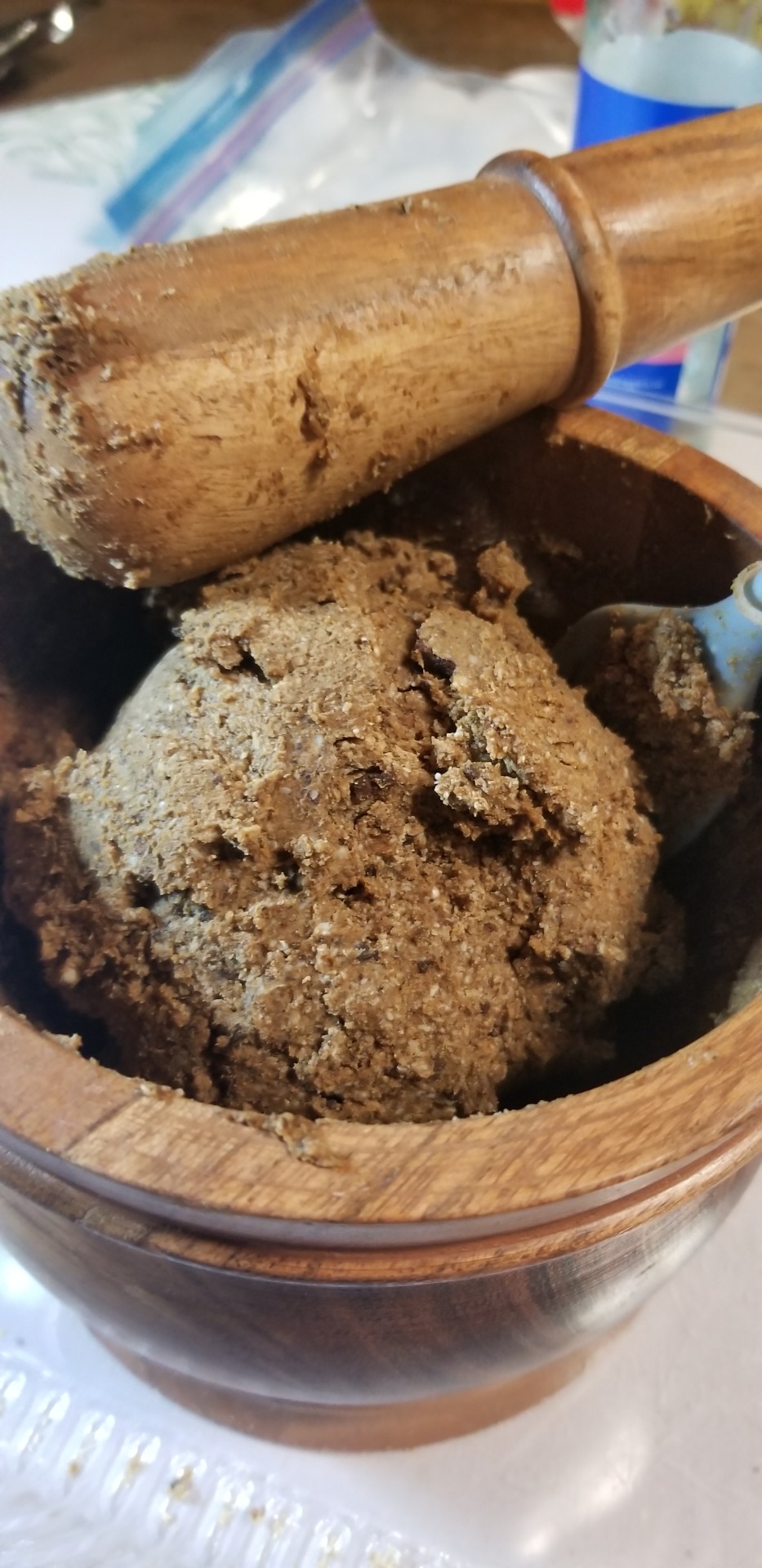
Figure 7. Hello, brown.
As you can see, the soap mix does form up very nicely, though it still requires a spatula to clear the sides of the mortar and pestle.
At this point, remembering that the last time I hand-rolled wash balls my palms came away Very Brown, I donned some latex gloves before I commenced my rolling. However, because (and again, I cannot stress this enough) I lack patience, I threw in another change: rather than leaving them as balls, I squished them slightly between my palms to flatten them into slightly more traditional soap shapes.

Figure 8. Cookie dough or falafel: you decide.
A note regarding the scent: Whether it’s the relative lack of the lavender, or the big bump to the orrisroot (or some magic alchemical combination of the two), the soaps, while still smelling strongly like spice cookies, now have an oddly-unfamiliar-but-fascinating scent profile, similar to what I found happened when I made the lip pomatum. There’s no good reason why this should make me believe that I’ve come closer to a “real” recipe, but the feeling is there nonetheless– and it’s definitely interesting.
Finally, and because the flat sides of these soaps looked too innocent, too pure, I decided to try that octopus stamp again. For future reference, stamping immediately after making these? Not a great idea. The soap stuck to the stamp like a bramble to an unsuspecting shirttail, and so a lot of detail was lost. But regardless–

Figure 9. Spice cookie kraken soap cakes, oh my god.
And now, I actually do have to wait a few days before I can try them out, or they’ll fall to absolute pieces. Soon we shall see how they dry (and probably do more unfortunate stamp experiments on them).
——————————
LOCAL WANDERINGS
A pair of weekends past my sister and I visited Old Sturbridge Village for their Textiles & Trades Weekend.
Old Sturbridge Village, or OSV, is one of the several living, open-air history museums that exist in New England– keen readers may recall, in fact, the description of Mystic Seaport, a similar museum, that previously graced these pages. [Issue 10 -Eds.]
So as to most easily skip to the good part, OSV’s own description reads:
Old Sturbridge Village, the largest outdoor history museum in the Northeast, depicts a rural New England town of the early 19th century. The Village is designed to approximate the look and feel of a historic landscape and includes more than 40 historic buildings, such as houses, working farms, meetinghouses, a district school, country store, water-powered mills, professional and trade shops–all situated along the Quinebaug River on the homeland of the Nipmuc peoples.
It’s essentially an immersive experience with the goal of creating, for guests, the ability to better understand a historical time through physically interacting with recreations of it. In this case, OSV is recreating an 1830s New England town, complete with typical trades, community buildings, homes and gardens, heritage breed farm animals, and reenactors who walk the line between characters and docents.

Figure 10. The blacksmiths in their forge. The interpreter in the back was actively using the forge while we spoke;
the interpreter in front had spent most of the day making a spatula. The bellows above and to either side of the hearth
were both enormous and effective.
The Textiles & Trades Weekend was a fairly small event compared to some I’ve been to before, but it was a delightful opportunity to see live craftwork and, wonderfully, talk to various people about the behind-the-scenes work of maintaining– and iterating on– a living history museum.
Two people in particular were standouts. The first was Carrie Midura, the Coordinator of Historical Clothing. She had a table set up demonstrating some of the work the museum is doing to toward studying extant garments, creating “ghost” versions of them in white to provide a replica that’s safer to work with, and then using those ghost versions for all sorts of other activities, both practical and experimental, including: sizing up garments for the modern-age interpreters; practicing different handsewing techniques; and tie-dying fabric using period-accurate (but poison-free!) dyes and processes to try and recreate the patterns of the time for use in future costuming.
Video 1. This was one of the videos playing on the demonstration table, but the vest and gown highlighted in the video were on display and approachable, which was deeply cool. The description the video provides regarding how and why recreating from period materials is important is precisely why I dearly love my apothecary shenanigans.
Naturally, upon hearing that OSV was also interested in not poisoning themselves or others, I fell upon this poor historian like the uncouth grad student that I am– it is to her great credit that she did not call officers of the law upon me, but rather put up with both my eager interest and pointed me in the direction of historian Sally Pointer, who studies early technology and material culture over a time period that very slightly overlaps my own (and about whom I shall speak more in a future issue).
The second person who made my and sister’s afternoon a particularly fantastic one was an interpreter in the Salem Towne House named Cynthia. While dressed in period attire, she came upon me and my sister having raptures over the 3D illusion embedded in the papered walls of the parlor, immediately clocked Our Entire Vibe, and earnestly entreated us to look upon the glory of her wallpaper and despair.
(In my foolishness, I did not take a picture of said wallpaper, but you might see it from various angles in this Flickr album— it’s a latticework, with vines twisting over and under the slats.)
Having established all our nerd credentials, Cynthia went on to assure us that, for the time period, it was terribly out of fashion, but that, likewise, if we were to come back at night, when the trellised plants outside the window were in full bloom, and the firelight flickered and made shadows move the painted leaves like summer wind, then the effect was very arresting indeed.
Further things discussed with Cynthia included Henry V’s amazing survival of a battlefield arrow to the face following the genius surgery of John Bradmore; the constant rhythm of Humans Being Human for far longer (and far similarly) than many suspect; and the time an 8-year-old boy, being told that he could not touch the historical furniture, decided his next best action was to throw a punch into the stomach of the interpreter preventing him from his will– and his very educational discovery, at that point, of what it both felt and sounded like to have his knuckles connect with a busk made of solid oak.
To her very great credit, Cynthia took the opportunity to both gently let the child know that this was not appropriate behavior, and also– through her entire lack of reaction whatsoever– somehow imply that the secret nature of all persons in historic garb was that of Solidity and Ow.
It was, overall, a lovely day.
——————————
NOTES FROM THE FALL COLLECTION
New entries to our catalogue of Things the Editors Would Quite Like to Possess, Thank You:
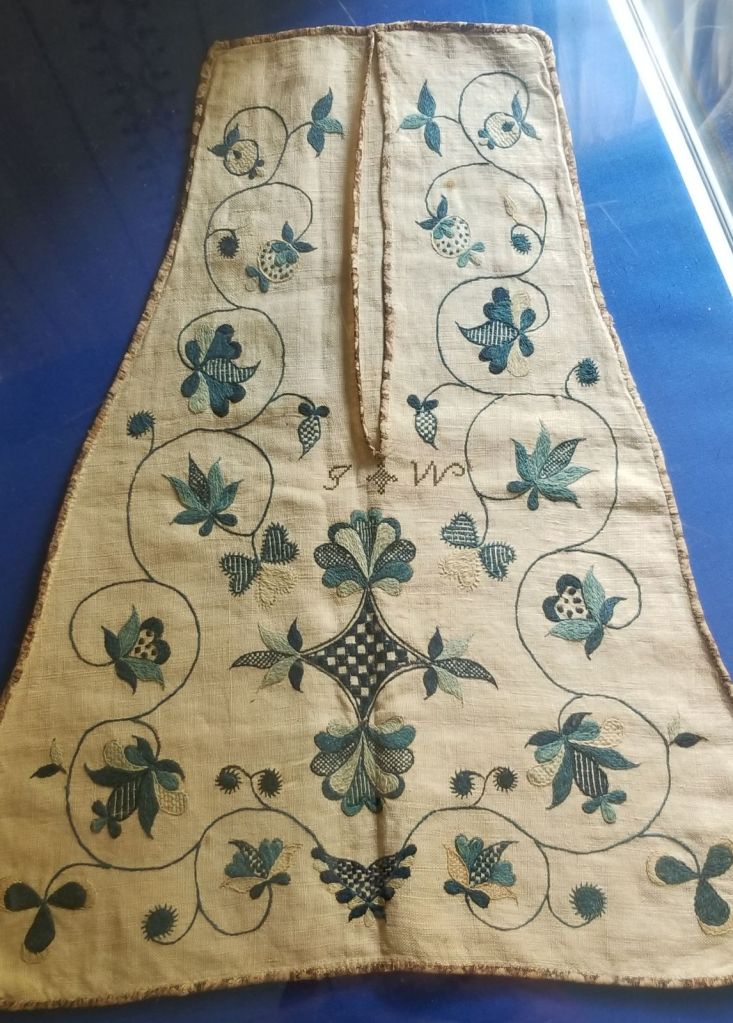
Figure 11. This embroidered lady’s pocket, from the OSV.

Figure 12. This zoomed-in photograph of a large wooden mortar and pestle on an OSV kitchen shelf,
beckoning me close while the rope around the actual doorway held me back and taunted me for my desires.
——————————
PERHAPS A SMIDGEON OF MEDICAL HORROR AFTER ALL
While today is not the day for historical medical horror– despite the fact that I have discovered OSV’s entire webinar on early 19th-century medicine, be still my beating heart– there is still some information I should share regardless.
In a recent Minor Thought, I mentioned that I would, in October, be visiting England and valiantly attempting not to burgle the Royal College of Physicians. Unfortunately, this is not to be– I have, within the last week or so, discovered that I must have a fairly serious bit of abdominal surgery, the likes of which will both prevent me from my immediate trip and also from flying in general for some months (largely due to the incompatibility of newly-porous body parts and pressurized air travel.)
The circumstances surrounding this discovery are ones too lengthy for this particular issue, so let me instead say– it will likely be all right, and all manner of things will be all right, but a kindly thought winging in my general direction would not, I think, go amiss. I shall endeavor to draft and schedule some issues to drop during the period of time when holding a laptop may be Unappealing; we shall see what might come of it.
——————————
COMMONPLACES
From Dorothy Sayers’s Gaudy Night:
Round and round, like a squirrel in a cage, till at last Harriet had to say firmly to herself: This won’t do, or I shall go potty myself. I’d better keep my mind on the job. What’s taken Peter to York? Miss de Vine? If I hadn’t lost my temper I might have found out, instead of wasting time in quarreling. I wonder if he’s made any notes on the dossier.
She took up the looseleaf book, which was still wrapped in its paper and string and sealed all over with the Wimsey crest. “As my Whimsy takes me”–Peter’s whimsies had taken him into a certain amount of trouble. She broke the seals impatiently; but the result was disappointing. He had marked nothing–presumably he had copied out anything he wanted. She turned the pages, trying to piece some sort of solution together, but too tired to think coherently. And then–yes; here was his writing, sure enough, but not on a page of the dossier. This was the unfinished sonnet–and of all the idiotic things to do, to leave half-finished sonnets mixed up with one’s detective work for other people to see! A schoolgirl trick, enough to make anybody blush. Particularly since, from what she remembered of the sonnet, its sentiments had become remarkably inappropriate to the state of her feelings.
But here it was: and in the interval it had taken to itself a sestet and stood, looking a little unbalanced, with her own sprawling hand above and Peter’s deceptively neat script below, like a large top on a small spindle.
Here then at home, by no more storms distrest,
Folding laborious hands we sit, wings furled;
Here in close perfume lies the rose-leaf curled,
Here the sun stands and knows not east nor west,
Here no tide runs; we have come, last and best,
From the wide zone in dizzying circles hurled
To that still center where the spinning world
Sleeps on its axis, to the heart of rest.
Lay on thy whips, O Love, that we upright,
Poised on the perilous point, in no lax bed
May sleep, as tension at the verberant core
Of music sleeps; for, if thou spare to smite,
Staggering, we stoop, stooping fall dumb and dead,
And, dying so, sleep our sweet sleep no more.
Having achieved this, the poet appeared to have lost countenance; for he had added the comment:
“A very conceited, metaphysical conclusion!”
——————————
ANNOUNCEMENTS
Oh, Gentle Readers. The year is turning, and we must turn with it. Let us be the humming-top, beautiful and big and peaceful, and avoid, as ever much is possible, each of own perilous points.
******
If you would like to write a letter to be produced/answered in the magazine, please email me at minor.hours.magazine@gmail.com with the subject line:
Letter to the Magazine: [subject of letter as you would like to see it printed]
If you wish the letter to be anonymous or under a nom de plume, please state so in the body of the email; similarly, if you’d rather not be printed at all, please also state so in the body of the email. It will otherwise be assumed that mail sent to that address is intended for print.
Alternately, commenting on this post will get you a similar result, with much less fuss.
******
-Until next time, be safe.
Discover more from Katherine Crighton
Subscribe to get the latest posts sent to your email.
 Katherine Crighton