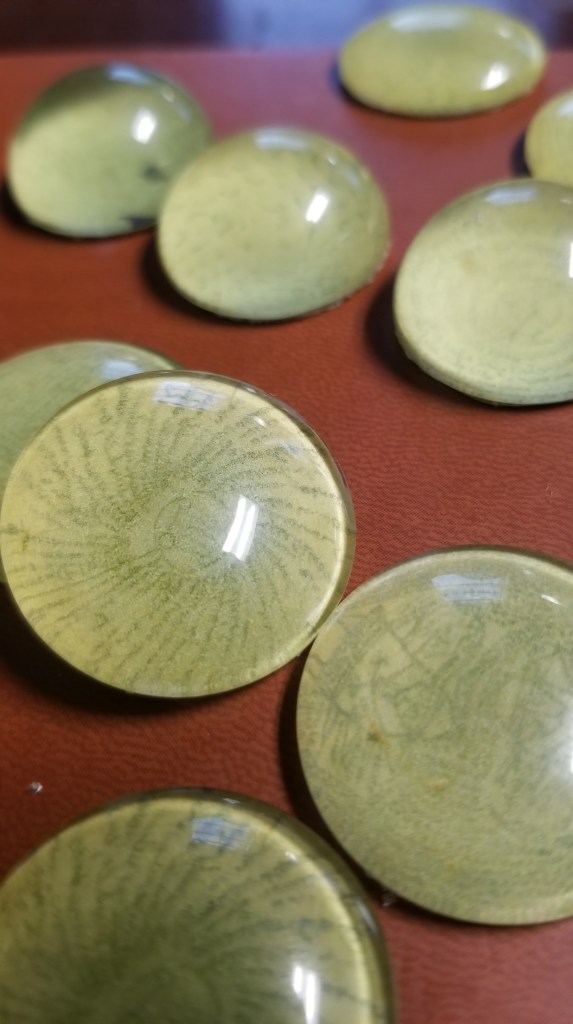
Glass Cabochon Stickers and Magnets
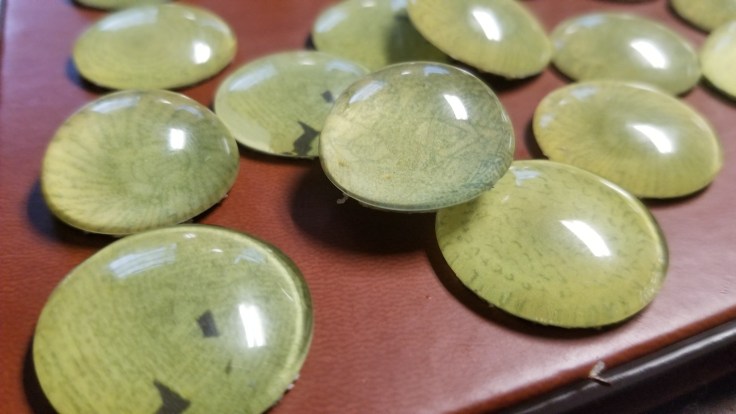
A modern approach to safely and humanely disposing of demons or — if you’re more interested helping preserve the biodiversity of our metaphysical ecosystem — providing nestboxes for otherworldly guests.
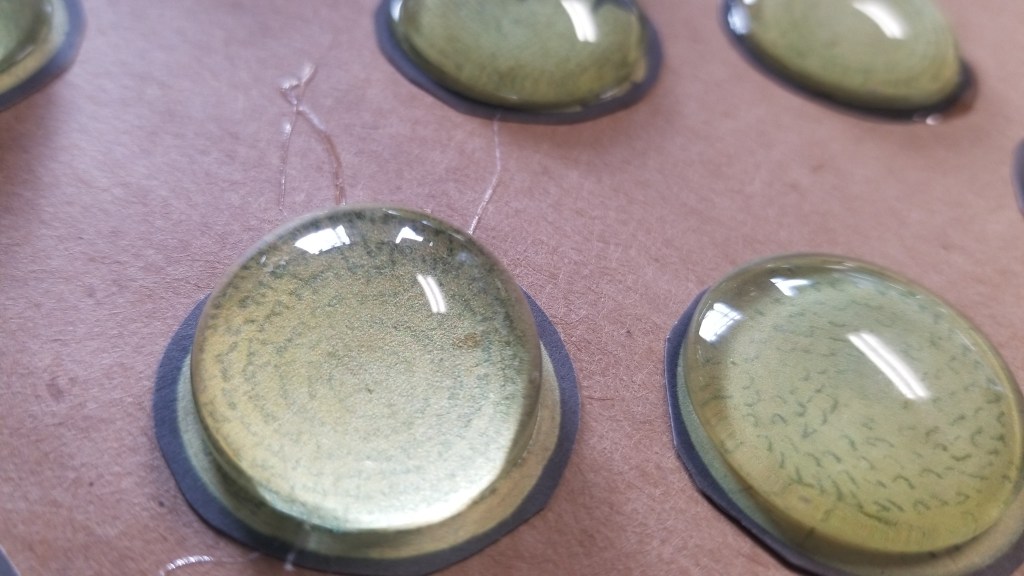
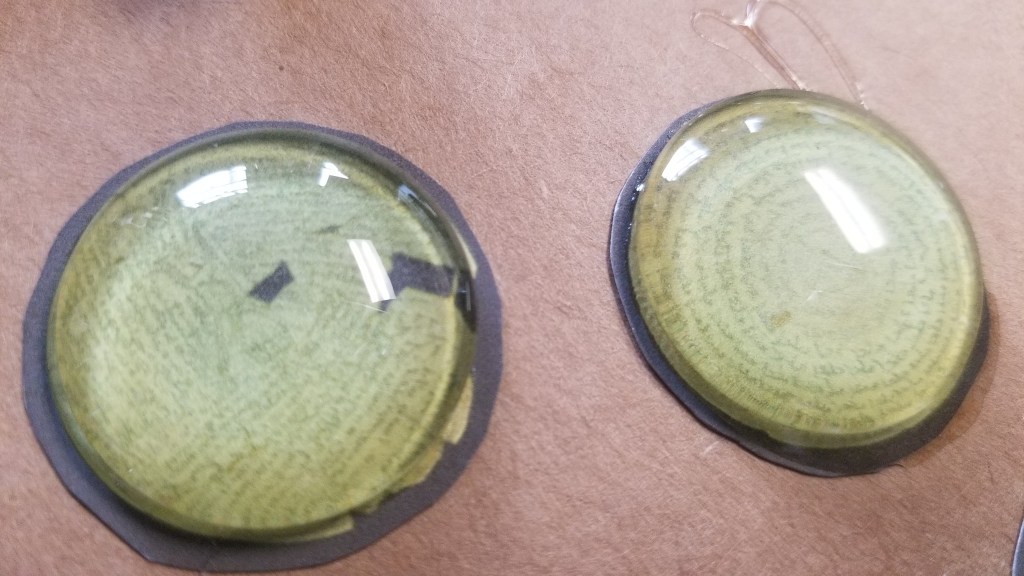
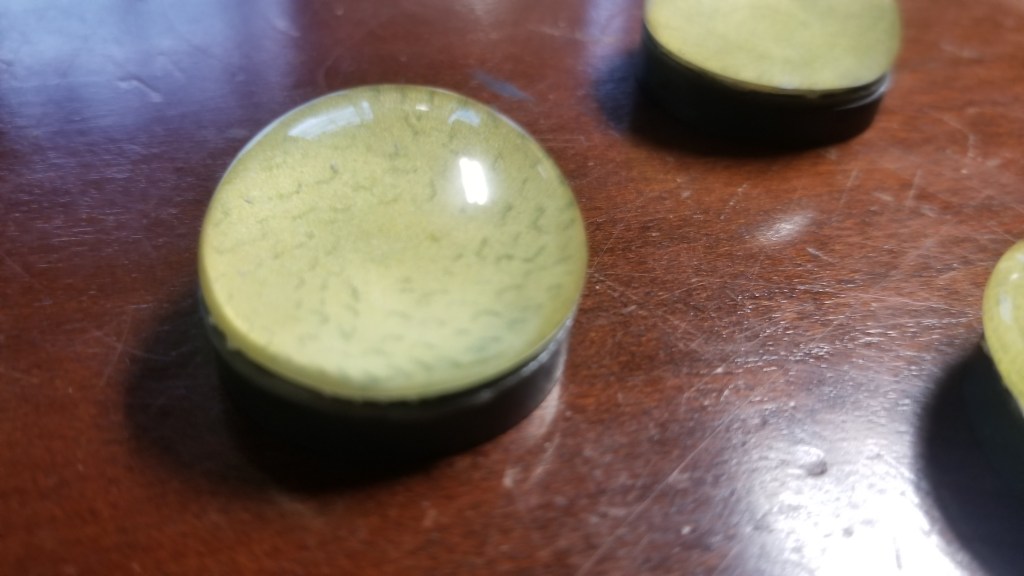
Originally created as stickers to test the concept, the remainder have had 1-inch glass cabochons, both shallow- and high-domed, added to them to magnify the appearance of the art and voces magicae inscribed on the bowls over a thousand years ago. They have then either had heavy-duty ceramic magnets attached to them or have been left with sticker backs, allowing you to move or attach your personal demon catchers at your convenience.
I already have the next iteration ready to go, but I’d like to clear this stock first. In the future, they’ll probably go for $2 each and in sets as well, but this first batch will be $1 each, random selection; contact me if interested in a larger number and/or a shipping estimate.
Keep reading for more information about these bowls…


What are “Babylonian demon bowls”?
Also called incantation or magic bowls, these examples of protective magic from Late Antiquity are “inscribed earthenware vessels […] found in several sites in Iraq and Iran, dating from the 6th to the 8th centuries A.D. and […] unknown outside that region.”
How were they used?
Over a thousand years ago, people concerned about a demon in their home would go to their local magician and get a bowl inscribed with voces magicae, magic words typically laid out in a spiral pattern to draw the demon to the bottom of the bowl like an esoteric flytrap. Once the bowl had “trapped” the demon, it would be taken out and carefully buried upside-down to remove it — it’s why we have so many extant examples of these bowls available to study today.

I happen to love looking at these different bowls, because while some have spells that have been meticulously constructed, such as the one written in Mandaic (an Eastern Aramaic language) above, some are, well, not quite as professional — such as the bowl here, marked up with asemic writing that is likely intended to replicate the appearance of the Jewish Babylonian Aramaic many of the bowls were written in.
Top image credit: “Bowl with incantation for Buktuya and household, c. 200-600 AD – Royal Ontario Museum.” (Wikipedia) Photograph by Daderot – Own work, CC0. https://commons.wikimedia.org/w/index.php?curid=17827558
Bottom image credit: “Kelsey Museum 19501.” Photograph by Nathan Garcia, Bill Wood, and Fred Anderegg, Kelsey Museum, for Gideon Bohak’s exhibit “Traditions of Magic in Late Antiquity,” 1995. https://deepblue.lib.umich.edu/bitstream/handle/2027.42/108169/intro.html
 Katherine Crighton