The time has come for some actual pomatum and 100% less fun with fire (as the prophecy foretold).
When last we checked in on our intrepid hero (me), I had cruelly destroyed one of my young apprentices, poor Henrik, in the pursuit of making my own pearl powder. When I couldn’t find a replacement lid for him, I went ahead and bought his brother Frederik– who then, promptly, was likewise destroyed in yet another attempt to powder pearls that we don’t need to talk about don’t worry everything’s fine just keep moving everything’s find it’s fINE–
Ahem.
Brave lads, we salute you, but I can only destroy so many coffee grinders before I start to feel like maybe enough’s enough– so I finally succumbed and bought some actual cosmetic-grade micronized pearl powder as suggested by a helpful Reader.
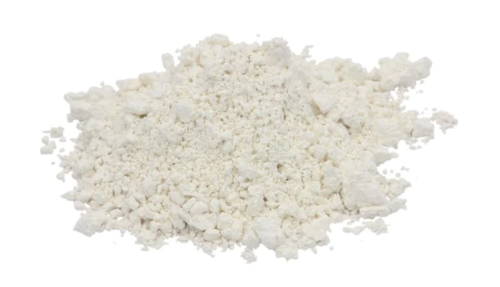
Figure 1. Totally normal, not suspicious-looking micronized pearl powder,
where “micronized” means “not cocaine, regardless of certain choices made in
product advertising photography.”
Ingredients-wise, this means I could get to work making the pearl pomatum with the following ingredients:
- 2 ounces of sweet almond oil
- ½ ounce of beeswax
spermacetiahahahaha no, we’ve discussed this, no whale skull wax goo thx- a Bunch of rosewater (just keep a bottle ready, tbh)
- a heaping quarter teaspoon of pearl powder (because I like to be Fancy)
a teaspoon of boraxNOPE replace with maybe four teaspoons of baking soda
Actually, on that note, I’ve talked about spermaceti briefly before, but now it’s time to talk about a new historical ingredient–
BORAX: THE TROUBLESOME LAD
Both of the recipes I’m referencing involve borax, a basic (as in, pH level basic) as fuck salt currently most often found in American laundry aisles because it’s been banned to heck in the EU.
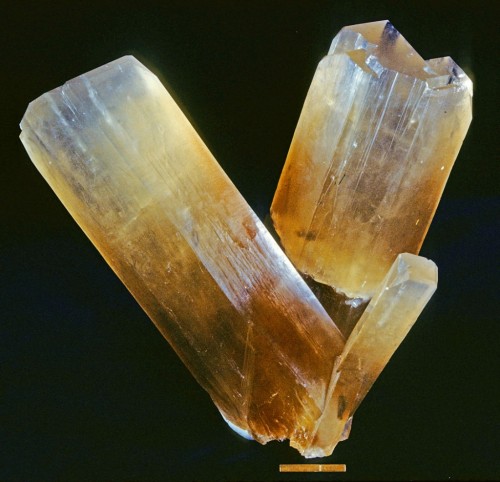
Figure 2. A salty crystal boy.
Why’s it banned? Great question. So far as I can tell boric acid, which is a kissing cousin to borax, may cause funky issues with people’s reproductive systems. And since that’s not fun, and borax isn’t actually that popular these days so there’s no big drive to study whether it shares the same issues as boric acid… ban-hammer.
However, we here in ‘Murica are Ridiculous, so naturally I bought some. For the sake of Science, I made the first test batch with it, along with the very very crunchy pearls poor Frederik managed to powder before succumbing to his wounds.
Borax is pretty dang cool, so it’s unfortunate that it may also be Dangerous, but in short, it’s got a pH of about 9.13– replacing it with baking soda, which is about a 9 on the scale, is a reasonable substitute, and my experiments with it bear that out. I would say the version with baking soda is a liiiittle bit less shelf-stable than with borax, but otoh, the earliest recipes didn’t have it, the later recipes didn’t have it, I like refrigerating the pomatum anyway and I don’t want my reproductive organs to turn into snakes (…more than they have already by this point), so fuck it. Baking soda it is.
Which brings us to–
THE PEARL POMATUM, CONT’D
Take my hand. Look into my eyes. Feel me when I say:
Making this pomatum is basically magic.
To start with, if you look at the ingredients, it’s a bunch of yellow stuff and clear stuff, no in-between.
By the time we’re done with this recipe, though? That whole mix is gonna be WHITE and it’s gonna be SMOOTH AS HELL.

Figure 3. Sweet almond oil and broken up chunks of beeswax just starting to melt
in their wee silicone tub (in the less wee but still fairly wee pot of boiling water).
(Side note: For those who are curious, that silicone pot is actually for melting chocolate, and they’re super cheap and easy to use.)
The second bit of magic, though, is revealed in the directions from one of the recipes. Simon Barbe, who is delightfully thorough in his descriptions, wrote:
Then take off the Fire your Composition, and pour to it by degrees some fair Water, beating it in the mean while with the Spatula. Continue so doing till your dish is full, and your Pomatum congealed in the Water, for it must swim in the Water: Having so beat it a long while in the first Water, pour the Water out, and put some fresh, still working your Pomatum till ‘tis white, then it will swim upon the Water.
See what I bolded there? “Swim in the water.” “Swim upon the water.” Sounds fanciful as all get out. Nicolas Lémery, whose directions are considerably shorter and more off the cuff, doesn’t mention anything about “swimming” – and in looking at later, related recipes, that little detail also tends to get omitted.
I wasn’t sure what the hell it was supposed to mean, so I figured I’d just follow Barbe’s directions to see what happened. As soon as the beeswax and almond oil had completely melted together, I took the pot out of its bath and starting pouring in “by degrees” the rosewater (presumably so I would not, again, explode my workspace):

Figure 4. Glug glug, lil guy.
You’ll notice, from the photo, that the mix turned pretty quickly into something (still) yellow that went from a thick liquid to something the consistency of, say, creamed honey. Not swimming, not white. BUT I PERSEVERED.
Little by little, the wax and oil mix took up the rosewater (via the wonder of emulsification)– but the directions said I had to slowly keep adding water until it reached the top of the container. Plus whatever that swimming thing was. So then I kept going, adding more rosewater to make up for what was soaked up, mixing mixing mixing, and seeing… a change come on.
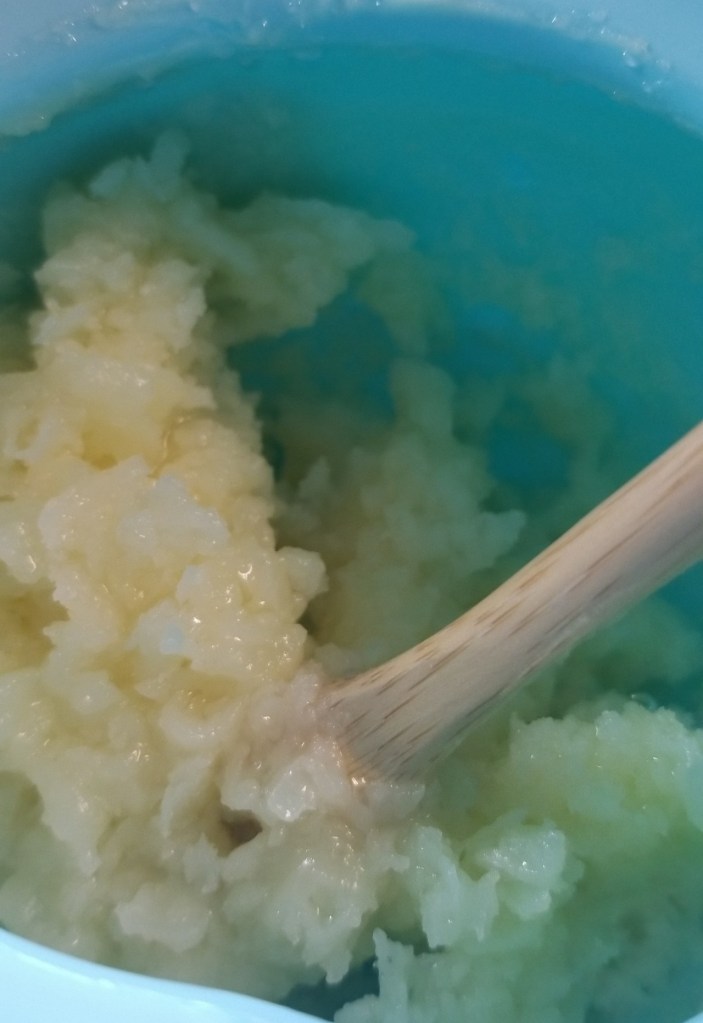
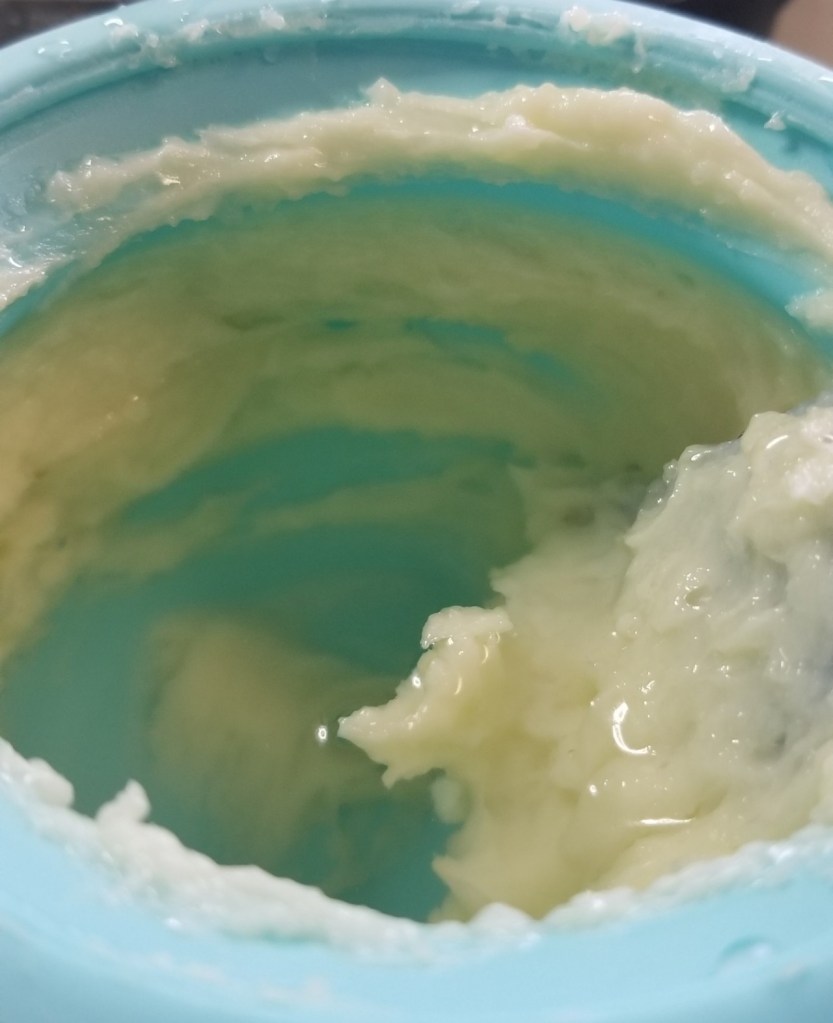
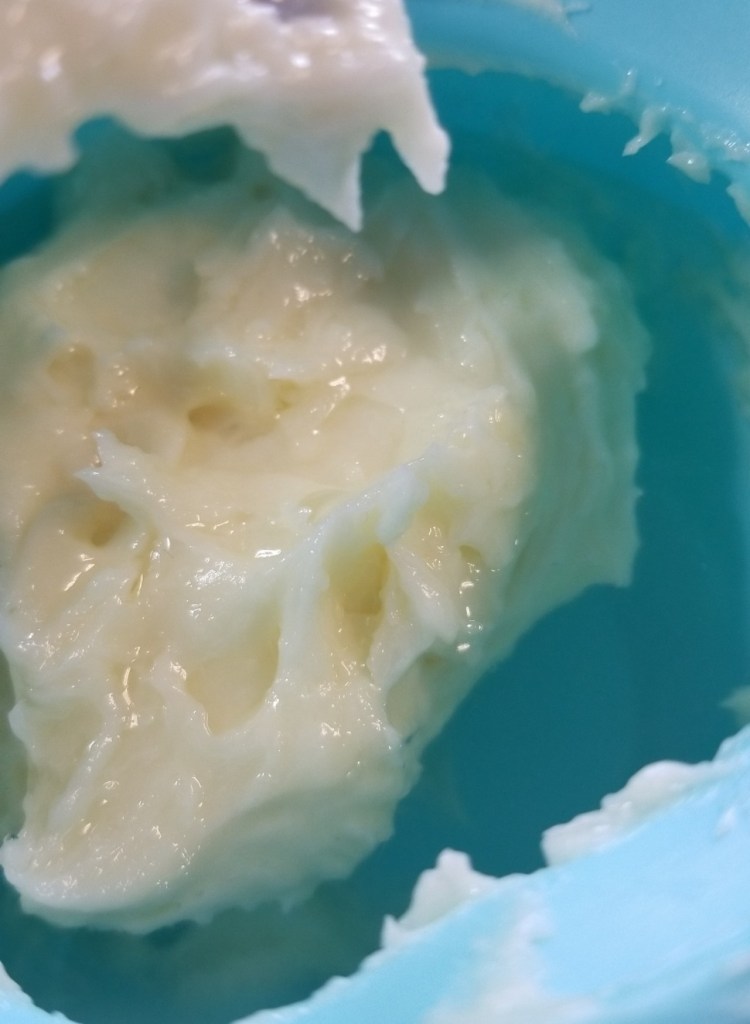
Figures 5, 6, and 7. Clumping together, and then… whaaaat
“OH,” said I. “SWIM. He meant it’s gonna fucking float.”
With a spatula, a bone-deep curiosity, and a podcast playing, I kept at it until, yup, I got all the way to the top of the container with rosewater– the mixture was now white– and by golly, the thing swam upon the waters.
I’ve since found that I don’t need to do a second-round of rosewater if I keep working the mix until it flat refuses to take up more water– instead, I can go to the next step, which is
take it out with the Spatula, and work it without Water, till it is very white. All the Water being strained out of your Pomatum[…]
So I was supposed to pull the pomatum out of its bath and squish it a bunch to remove the leftover, unemulsified rosewater. Which I did, pouring the excess water into the pot I’d been boiling things in.
HEY DO YOU WANT TO SEE WHAT ALL THIS LOOKS LIKE BECAUSE GUESS WHAT
Video 1. The pomatum after it has reached full on “swimming upon the waters” state,
such that I can jiggle the watery little fucker, followed by “working” the pomatum
on a room temperature pan to remove the excess rosewater.
Briefly, regarding the “room temperature” thing: I think the crystallization I got in my version 1 test (with the borax) was because the mixture moved from its warmish bath to a colder-than-it pan, and made it seize– therefore I think it may actually be worthwhile to have a slightly warmer than room temperature pan, though I’m not sure how to achieve that in a reasonable way. Put it in a warming oven? Do any of us have warming ovens?
Either way: Avoid having a cold pan.
Onwards. As soon as I stopped being able to squish rosewater out of the pomatum, I added the baking soda a little at a time and beat the snot out of it some more. It didn’t significantly change the consistency at this point, but it did help with the thickening once I finally stopped whacking it, going from a thick lotion to a more creamy balm.
Finally: the pearl powder. Apparently good for the skin in a variety of interesting ways, but mostly just adds the very faintest of sparkle to the overall pomatum.
Mixy mixy, scoopy scoopy, shut the lids and done. It makes about five .75 ounce tins, with an extra one for testing purposes. You will never, ever, ever get this pomatum completely off whatever tools you end up using, so just, like, hit up a thrift store and pick your eternal warriors.
So how does the pomatum look when it’s done? BABES, LEMME SHOW YOU.
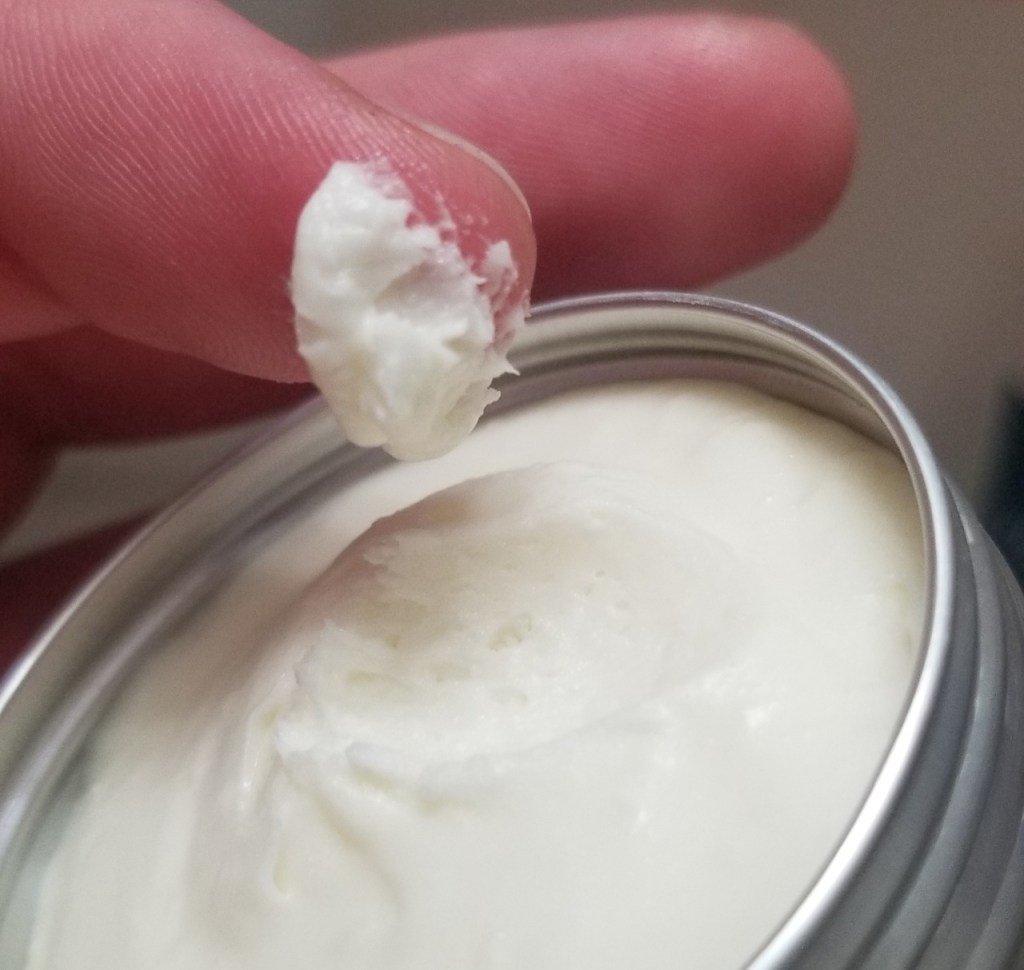

Figures 8 and 9. SO FUCKING PRETTY.
It smells like roses and needs truly miniscule amounts to moisturize places like my elbows (like, we’re talking the size you see on my fingertip there or smaller).
But it’s not just a moisturizer– the baking soda (or, previously, the borax) is basic enough to slightly saponify the beeswax… which means I have, once again, made SOAP.
(THIS IS MY LOT IN LIFE, I AM COMING TO ACCEPT IT.)
Really, though, this pomatum is actually what we call cold cream, which works as a moisturizer, a facial cleanser, a makeup remover, and a visual gag in a lot of early comedies. (Female-presenting person with a towel wrapped around their head and a face covered in white goo? That’s cold cream.)
To be completely thorough, I did “wash” my face with it– by which I mean, I took a two-fingered scoop of the stuff and massaged it into my face, leaving it there for a couple of minutes because hey, felt nice. It smelled nice, too, which was delightful. Then I took some cotton rounds, wetted them with cold water, and wiped it off.
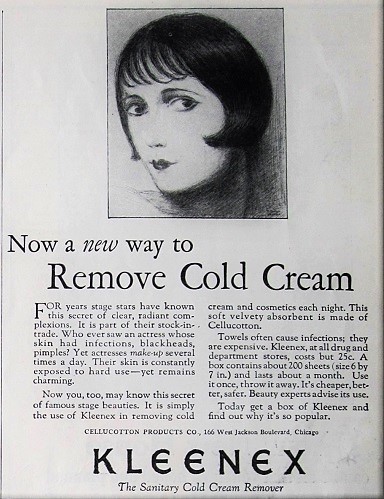
Figure 10. Side note: did you know that Kleenex was originally invented
as a disposable towel for removing cold cream, and only later marketed for blowing noses?
I think the pomatum worked, because it definitely seemed to dirty the rounds, but I don’t wear makeup so I didn’t get any proof of that aspect of it. However, I can say that my face? Has never felt so soft in my goddamn life.
And finally, for anyone keeping track:
To make one 2-oz tin and two ¾-oz tins of pearl pomatum takes approximately two-and-a-bit Wellington Paranormals.
…Pretty sure I am accurately nailing apothecary timekeeping, and no I will not accept anything more accurate.
Discover more from Katherine Crighton
Subscribe to get the latest posts sent to your email.
 Katherine Crighton
Leave a Reply