——————————
SOME EDITORIAL NOTES
As suggested prior, the Sunday Edition was in fact released– though how it may progress, only time will tell.
Meanwhile, the reprinting of my previous apothecarial writings has continued apace; at some point, I shall come to an end of it, and then I may begin summarizing my latest research and revelations, such as, among other things: FRUIT FLIES.
I leave this mystery to you, Gentle Readers, to consider briefly and then push from your mind as swiftly as possible. Because it promises to be disgusting? No no, that would be too simple.
Because you are about to read worse.
——————————
SOAP: FIT THE FIFTH
You have been so brave up till now. We’ve all seen it, and the Editors have made note of it. You have read through each soap update, following along with the experimentation and pinball research, and have been willing to row along with my nonsense cheerfully and without complaint.
Take my hand. You’re going to need some support through this, and I want to be there for you as you experience this new update:
Sometimes Science Gets Ugly
Let me begin by saying there’s going to be a significant glow-up at the end of this article. And that I have learned many lessons during this particular update, thus validating this entire experience as deeply educational. For all of us.
- Lesson 1: Past performance is not necessarily indicative of future results.
I am now in the dubious position of really understanding that the lip balm experiment— which only had two explosions during its making and was almost entirely useable within minutes of completion– was, perhaps, an outlier when it came to the true nature of experimental archaeology.
- Lesson 2: The scientific method exists for a reason.
Much like working on a farm leads to a greater understanding of where one’s food comes from, so too, for me, does going through multiple rounds of Renaissance/Baroque-era European soapmaking lead to an understanding of how exactly the Scientific Revolution came to be.
Because (according to Wikipedia) what I’ve been reading in all these books and treatises and random household manuals from the 16th, 17th, and very very early 18th century is, essentially, the development of systematic experimentation to figure out Stuff. I have, unknowingly, been going along the same journey along with these folks from 300+ years ago, which makes me Feel Some Things, Okay.
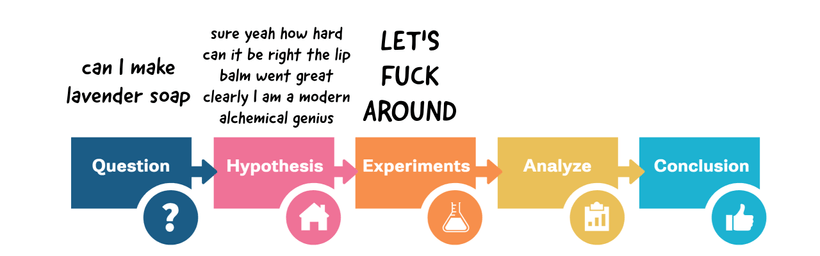
Figure 1. The Editors having a whole scientific revolution of their own, this will go great, no worries.
- Lesson 3: Even a failed experiment can have value.
As I was supposed to have learned in elementary school and am instead realizing in my forties: Fucking up isn’t a bug, it’s a feature.
For instance– just for instance– a failed experiment can still, say, induce such paroxysms of giggles in those who don’t expect its appearance that if we consider the joy that a first round of experimentation can bring to others– never mind what exactly that joy is in honor of— surely we can count said experiment as an unalloyed success.
And with this in mind, let me show you what our green, cookie-scented lavender soap looked like after drying for 8 days:

Figure 2. Welp.
(I NEED YOU TO REMEMBER THE GLOW-UP, OKAY, THIS IS NOT THE END.)
(it just… it just looks like it is.)
Anyway. This is the smallest of the wash balls, the one about the size of the end of my thumb. It had the least surface area, so was the driest. Lest you think the others had been spared this transformation–

Figure 3. The wash balls turned belly-up.
You can see that where the soap was previously not hitting air, it was still light colored, but dear lord, it had otherwise changed into that rather startling shade of constipated dehydrated brown. They had also, as they dried, collapsed into a much lumpier, less spheroid shape.
This wasn’t entirely unexpected, though I’d certainly hoped for a different outcome. There is, in fact, at least one other company out there making soaps from the same recipe books as me, and their results are… similar to the above.

Figures 4 and 5. I genuinely thought I could do better on my first try than the Venetian Barbers’ Wash Balls (left)
or the Delicate Wash Ball (right), for which I would like to humbly apologize
and beg forgiveness from the gods for my hubris.
My first attempt here, though? Not ideal.
But. Barbe’s The French Perfumer tells us how to gild whatever stamp we press into these kind of soaps. So… surely. Surely. SURELY they wouldn’t add gold to. that.
I of course tried to correct the issue. I took one of them and tried to rub away the knobbly bits before using some of that infused oil of lavender to try and smooth it out further. (You see? I told you it’d come back.)
To say that it didn’t work would be… something of an understatement.

Figure 6. A now shiny lump of shit.
But wait, you say. Have you tried actually washing your hands with it?
Reader. I did.
What’s more, I took a video. And of course I added a soundtrack to it, and yes it is clown music.
In brief:
- It lathers like regular olive oil soap, which is to say, with a very liquid-y, not particularly bubbly lather.
- The lather, however, is brown.
- Yes, this means that it did look like I was washing my hands with a dried piece of shit that melted into a sort of mucus-like–
Look, you get it.
For what it’s worth, it still smelled great and it did leave my hands pretty soft. The soap itself was solid and didn’t crumble. All promising. On the other hand, if I’d used a white or light-colored towel to dry my hands, it would’ve stained it, so, like. There’s that.
In the course of researching what in the world happened here, I found out that vanillin will oxidize and turn brown unless you Do something to prevent or ameliorate it– but there’s no vanillin in any of the ingredients. I also found out that there are soaps out there that produce lathers that aren’t white— but they seem to usually include either charcoal or tar, neither of which are ingredients here.
Though… I also found out that cloves can turn soap and lather brown– or rather, ahem, “a russet lather”, as in this shaving soap. So the cloves may be the culprit. But interestingly, when I flipped the version 1.0 soaps over to try and at least get an even dark brown color, the color change either didn’t happen or slowed considerably… which lead me to the final suspect: the dried lavender flowers. Which, along with most other dried botanical materials, apparently, will brown when mixed into soap, exacerbated by heat and sunlight.
…And the thing is, the recipes had mentioned letting the soaps dry in a cool, dark location, but I, in my infinite wisdom (and concern about how sticky-wet the soaps were), may have. um. put the drying tray. near a western-facing window and opposite a fan-blown wall-mounted gas heater. In winter. At which point the wee bastards went from the previously described herbal green to cat-shit brown in less than 24 hours.
Listen. Mistakes were made.
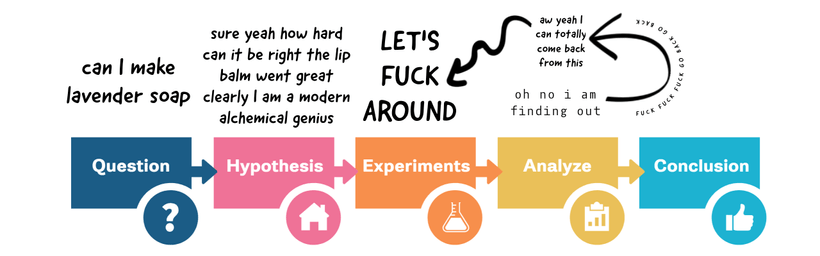
Figure 7. Time to move on back to the earlier “experiment” phase.
Which brings us to:
Version 2.0: Better, stronger, more expensive
I made two big changes from version 1.0:
- Process, My Darlings
Using my hands right from the start was a no-go– too sticky. Adding a bunch of rosewater to soften the soap up first, also a bad idea. Plus using as much arrowroot as I did in order to manage the situation did not, I think, help the slimy quality of the lather later.
Looking again at my collection of recipes, I went from focusing on ingredients and their preparation to the actual physical process of the soapmaking.
Sir Plat’s 1609 Delightes for Ladies said to beat all the ingredients in a mortar, then add in some soap, then dissolve in a little bit of rosewater and “then incorporate all your powders therewith, by labouring of them well in a mortar.”
Woolley’s 1670 The Accomplish’d Lady’s Delight didn’t mention rosewater at all, but rather said to beat all the ingredients in a mortar to a powder, then add the soap and beat them all together “till it be stiff, then work it like Paste, and make round balls thereof.”
Shirley’s 1687 The Accomplished Ladies Rich Closet of Rarities (okay, man) again said to beat all the ingredients into a powder, then add “as much Castle sope as will make it into Balls, when mollified with Rose-water.”
So… it seemed pretty consistent. My new plan was to:
- grind my herbs
- add in the (much more finely grated) dried soap and stir it up some more
- add only as much rosewater as needed– and in small splashes in between stirs– to get the mixture to turn into a paste
But this actually brings me to change number 2–
- Guess who found some fancy ingredients!
As it turns out, my local metaphysical shop happened to have gum benzoin (which is either identical to or pretty close to what my dudes called “Benjamin”) and dried orrisroot. Since both of those– and the orrisroot in particular– are regular ingredients in these soaps, I picked some up, and probably paid an outrageous mark-up to do so.
I also checked their chemical compositions, just in case, like, maybe one of them secretly turns soap white? Because that would be… convenient? Which is how I found out that the orrisroot has, among other things, oil of orris (shocker), which itself contains myristic acid (used for cleansing, emulsifying, perfuming, and as a foam building cleansing agent, hooray!). And gum benzoin has, among other things, cinnamic acid (also found in shea butter, and considered good for both perfuming and skin conditioning), benzyl benzoate (considered good for perfuming and as an antimicrobial) and blasted brown-oxidizing vanillin, drat it.
We will come to see if I regret some of these additions.
Anyway. Let’s go back to process. The new recipe became:
Version 2.0
1 oz. whole cloves
1 handful dried French lavender flowers
1 oz. benjamin
1 oz. orrisroot
7 oz. dried soap
rosewater, q.s.
Let it be said that almost all of these little dudes ground up beautifully, but orrisroot is a brat.

Figure 8. Why are you like this, orrisroot.
After quite a bit of time at the mortar with the orrisroot wanting to stay in hard lumps forever and ever amen, I decided that this now constituted the kind of preparation that probably apothecaries handed over to their small apprentices to keep them busy for a few days, and so I decided to get my own small apprentice.

Figure 9. Meet young Thomas, also known as a secondhand coffee grinder I thought might be useful some day
and guess what IT WAS– along with the remnants of the powder mix.
So after Thomas beat the ever-living snot out of everything, I had a pretty fine powder, though I had to let it settle for a second before I took off the lid– the whole dusty thing wanted to float riiiiight up into my face at the slightest provocation. I transferred the powder into a larger, wooden mortar that I’d picked up on sale from an off-price retailer (where the kitchen section had mortars and pestles aplenty just waiting for ridiculous persons such as myself to scoop up), added the dried soap, and got to mixing.

Figure 10. Mixy mixy.
Once the soap was fully incorporated in the powders, I started adding splashes of rosewater to get the thing to start binding together. Pretty quickly it became apparent that I needed a spatula to help scrape the soap off the pestle and down the sides of the mortar, but otherwise it was… actually a pretty tidy process. “Paste” really is the right word– not sticky, not bubbly, and after about 8-10 minutes of work it was, overall, very similar to the consistency of playdough.
The soap paste was green again, but much more even in color and less herbal all the way around– and I found that when the whole thing was incorporated, I could just… take a hunk of it off and roll it easily in my hands, no arrowroot needed (though I did add a few drops of my infused oil of lavender because why the heck not). The balls came out beautifully smooth, with a kind of pebbled granite look. Literally the only downside was that the palms of my hands turned very brown (heh, “russet”). The brown washed away when I used some regular liquid handsoap, though I had to rub a bit– we’ll see if that persists.
But anyway. I promised a glow-up, and by Grabthar’s Hammer, I aim to deliver.

Figure 11. Revenge of the Lavender Wash-Ball.
And for those wondering: yes, I very carefully put the soap to dry in the shade and away from the blower. I aimed to make brand-new mistakes for the next round of experiments.
——————————
COMMONPLACES
From twitter user @hell_doe:
thinking about the girl who brought me coffee from texas and joked that i would have to ration it out for special occasions. my friend, i do not save my good things. being alive is as special an occasion as it gets
******
From twitter user @deathbybadger:
ten years as an antiquarian, hearing nothing but “my relative kept these untouched in a box their whole life but they died, and I don’t want this stuff” has radicalized me. annotate the books. use the china. wear the clothes until they wear out. your life should not be a museum
******
From tumblr user @tropics777:
And in these next 50 years you will eat so many delicious meals, laugh so many times with so many people you love, shout and scream and sing and cry and smile so hard your face hurts. And you will see such beautiful sunsets and feel fresh cold air on your face and feel warm and safe wrapped up in your favourite winter coat.
——————————
ANNOUNCEMENTS
Perhaps someday I shall be done with my soap escapades.
But it should be noted that I wrote the above over a year ago. And I am still as I am.
Lol.
******
To the Gentle Readers supporting The Minor Hours: Erste, Sekund, Terzo, and Quartus, thank you for your continuing support!
******
If you would like to write a letter to be produced/answered in the magazine, please email me at minor.hours.magazine@gmail.com with the subject line:
Letter to the Magazine: [subject of letter as you would like to see it printed]
If you wish the letter to be anonymous or under a nom de plume, please state so in the body of the email; similarly, if you’d rather not be printed at all, please also state so in the body of the email. It will otherwise be assumed that mail sent to that address is intended for print.
Alternately, commenting on this post will get you a similar result, with much less fuss.
******
-Until next time, be safe.
Discover more from Katherine Crighton
Subscribe to get the latest posts sent to your email.
 Katherine Crighton