
——————————
SOME EDITORIAL NOTES
Behold! A new masthead! (The shame of the previous masthead’s error was such that I could not bear it any longer and I cast it from me, probably down a well.)
[Edited to add, upon the 1st of September in the Year of Our Fjord 2024, that the Editors have expunged the history of the revised Patreon tiers, here and in each issue up through Issue 39, for the betterment of mankind and the continuance of the Society of Well-Meaning Nonsense. -Eds.]
Further: I have also begun updating between issues with considerably shorter segments, each titled A MINOR THOUGHT, that represent the moments in and between my kitchen or workshop as I muddle my way through the making of strange new things ere they grace these pages.
——————————
A CORRECTION TO THE ALMANAC FOR JULY
There comes a time every summer when one must ask oneself: How do I know the fight is lost?
Gentle readers may recall that I had sworn an oath to hold out against installing my air conditioners for as long as possible. My private rule had been to wait until there had been at least three days of Unbearable Temperatures, proving that the Summer’s heat was not merely popping round for a brief visit but had, in fact, arrived with an ungodly amount of luggage and only a vague idea of its departure date.
The three-day heat has not, in fact, arrived.
But.
I live in a building that was, once, a house, and one that was built in an earlier time, before either air conditioners or significant global warming– when, in its original form, windows and doorways and stairwells and bedrooms were built in the optimal positions to keep cool in the summer and warm in the winter and, most importantly of all, with as little human intervention as possible to accomplish it. This delicate balance of architecturally powered temp control was never intended to be hacked into three separate living space, though– never intended to have its insulation pulled in favor of additional pipes and electrical, its rooms occupied unevenly and in strange configurations, the single organism of a household split into separate beasts each pulling in different directions.
And I had forgotten that there comes a time when these old houses reach the limits of their ability to fight the heat of the modern age– a tipping point, when suddenly the few architectural bits that maintained their regulatory power suddenly lose the battle and instead begin to work against their humble human occupants.
That tipping point was yesterday, and the reason this poor issue comes a day later than intended.
——————————
A HANDY HOUSEHOLD TIP
If you’re uncertain whether the time is right to install your air conditioners, consider the following list a helpful guide, allowing you to decide which one is the canary in your personal coalmine now to prevent yourself from, a week or so later, having to experience them all at once and! Without relief! Put a checkmark next to your personal tipping point and keep it handy for next year!
- The cats have chosen new and unusual locations to stare you, mostly from the floor.
- Your cell phone has become ominously slow.
- The idea of sitting for any length of time with a hot laptop perched upon your person fills you with a dull horror.
- You find yourself putting off interesting experiments requiring the kitchen oven until the small hours of the morning, which is not conducive to the diurnal living required by large portions of Society.
- You had always thought that “puddles” of sweat was hyperbolic; you were incorrect.
- Every piece of chocolate in the house has been rendered to the same consistency as a piece accidentally left in one’s trouser pocket through a long and very crowded day at the amusement park.
- You idly fantasize about taking a Nap with an Ice Pack.
- You take out the Ice Pack, heft it, consider your options, and reluctantly put it back before continuing to think about that Nap for the rest of the afternoon.
- After slipping in the sweat puddle left after standing too long in the kitchen contemplating your life and your choices, you throw all previous plans out the (stifling) window and instead haul the ice pack to bed with you, cradling it as you would a tender babe in arms while several fans point directly at you. As you steam gently into the already humid air, you realize in the foggy place just before sleep that “chill siestas” are not a thing you can reasonably expect to incorporate into your work/life balance, and so, perhaps, the time to put in the air conditioners has well and truly come.
——————————
SOAP: FIT THE SECOND
[As part of our continuing series of reprinted apothecarical exploits within these pages, we return now to the further exploits of the Lavender Soap. -Eds.]
I wanted to keep my plan for recreating (or more accurately, creating) lavender soap simple, which was only helped by the scant description I had to work with amounting to all of three words: “yummy lavender soap”.
“Yummy” here is obviously “very very nice”, not a quality of its taste, just as the “sweet Soap” referenced in at least one extant recipe refers to the scent and quality, and, again, not the taste.
(Although… there were recommendations in the manuals of the time that the soapmakers taste the soap mixes and the lye to determine whether they were cooking correctly. So… make of that what you will.)
Anyway, if it’s yummy and it’s scented, it’s going to be that nice solid white soap, and likely shaped into a ball. And, if I was going to be Accurate, I needed to buy some.
Stateside, the closest I could easily find to a period-accurate formulation was “Kiss My Face” brand olive oil soap– hilarious to imagine, but it’s green in color, which is Not what soap made from very high quality olive oil that’s been allowed to dry and age properly should be– so I said to hell with the inherent humor of the brand name and instead went really method: Say hello to Nabulsi soap, a next-door neighbor to Aleppo soap.
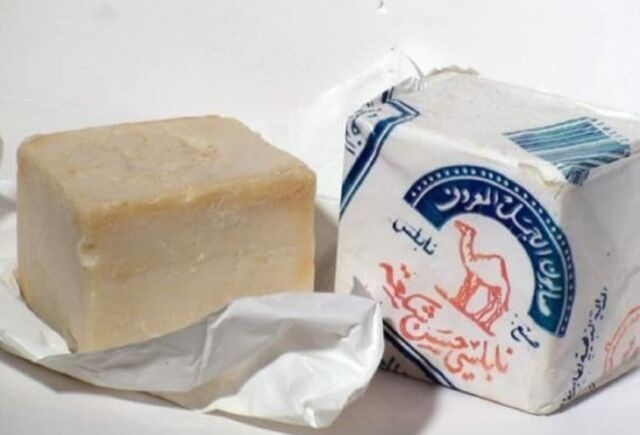
Fig. 1. What up, boys.
Nabulsi soap’s been made the same way for centuries, with the same ingredients– and unlike Aleppo soap, which has laurel berry oil (an ingredient Western soapmakers apparently did not successfully discover as part of their backwards engineering), Nabulsi soap is closer in ingredients and process to what the Western soapmakers were doing than just about anything else I could easily get my hands on.
(In particular, I think Nabulsi soap is still made with soda ash made from barilla, a salt-tolerant Mediterranean plant that was a key reason why these soaps were fucking amazing. Barilla farming and soda ash production was big business until 1792 when Nicolas Leblanc decided to personally ruin my dreams by discovering a way to artificially create sodium carbonate – the primary active ingredient in soda ash – thereby causing the collapse of barilla farming and my current inability to order barilla lye online.)

Fig. 2. That asshole.
Anyway, I figured Nabulsi soap was just as likely to show up as an expensive ingredient in an apothecary shop as any other soda-ash-and-olive-oil soap, and a lot closer to whatever a 1710s household would’ve used than more modern soaps. So, gentle reader, I bought some.
Most of the recipes I found required that the white soap be scraped or grated and then left in the sun for several days. Behold, in progress:
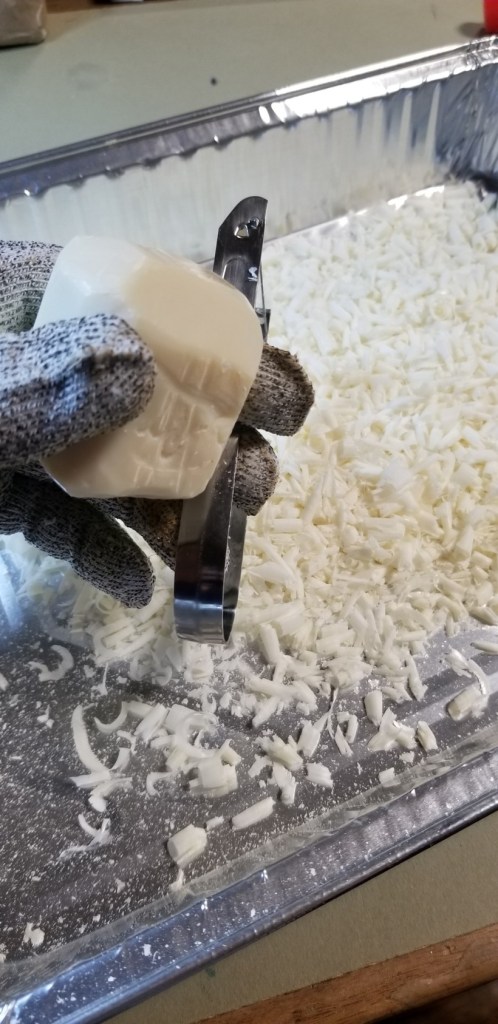
Fig. 3. A partially scraped bar of Nabulsi soap, a potato peeler, a “holy shit don’t cut yourself” safety glove, and thou.
These wee monsters took maybe an hour to scrape down, but I switched off frequently with my younger child, who would’ve apparently been the one Victorian kid who volunteered to spend all day at the factory, so your mileage may vary.
I would say that Nabulsi soap isn’t entirely scentless, but what scent it has is very light and fresh, not at all overpowering or chemical-ly. In future, I’m going to try a cheese grater or, if the gods smile upon me, a microplane.
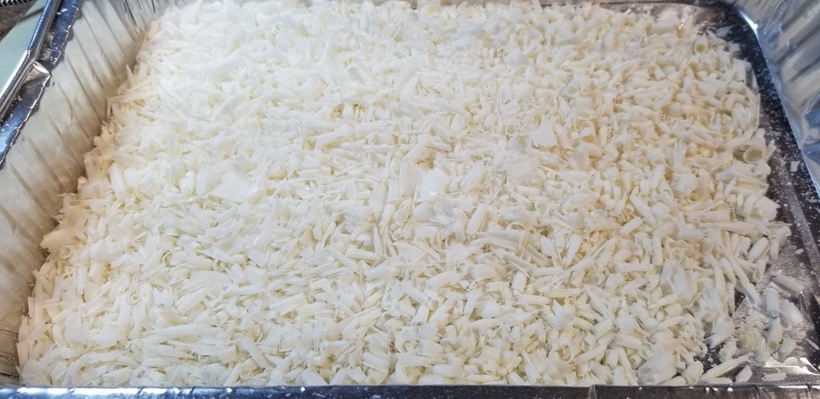
Fig. 4. The entire 7 ounce bar, reduced to smithereens.
This tray was then lightly covered with a see-through lid and in a sunny location in my studio– per Wecker/Culpepper’s 1660 Cosmeticks, I’d leave it to dry like that for the next 6 to 10 days (though I’d planned to stir it every couple of days, to ensure it was equally… whatevered).
While I waited on the soap, though, I knew I should turn my attention to the final riddle: “lavender”… next time.
——————————
TO MAKE WAFERS
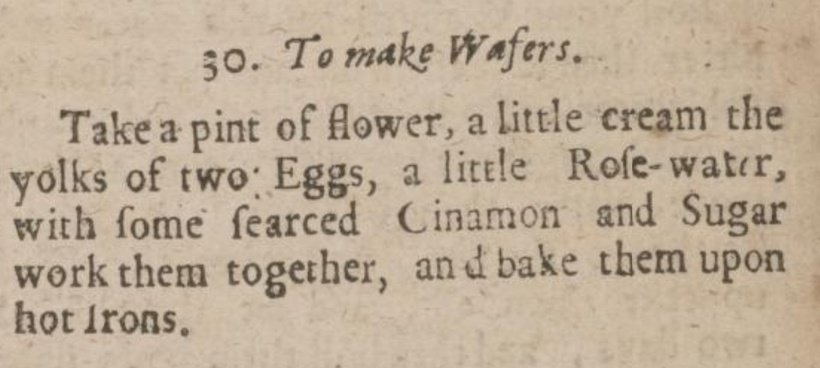
Fig. 5. Or, more precisely, waſers, as per Hannah Woolley’s 1675 printing of The Accomplish’d Lady’s Delight.
Readers who caught sight of my MINOR THOUGHTS this week know that this has been a recipe that sparked my interest (i.e., looked sufficiently simple and non-poisonous enough to attempt)–the text, with modernized spelling, reads:
“30. To make Wafers. Take a pint of flour, a little cream[,] the yolks of two Eggs, a little Rose-water, with some searced [sieved] Cinnamon and Sugar[;] work them together, and bake them upon hot Irons.”
…oh no.
Gentle Readers.
Gentle Readers, I must confess something.
It was not until this very moment that I realized that the recipe says upon hot irons.
I have, through my entire experimentation, believed it to read between hot irons.
Imagine, if you will, the Editors asking the Magazine’s Board of Directors (yes, naturally we have a Board of Directors, what do you take us for, you can’t trust Editorial staff with important decisions about cookware) for their input– that esteemed body of persons reminded the Editors that such a thing as pizzelles exist, an Italian cookie dating back to at least the 8th century according to very many online recipe blogs that cite only one another.
Then imagine days of research into the pizzelle’s surprisingly opaque history. The discovery of multiple saint/religious celebrations that somehow involve pizzelle in ways both unexpected and unverifiable. The tempting affordability of vintage handheld pizzelle irons. The promise of further study into the wild, multicultural world of “crispy wafer cookies squished between two irons.”
…and then, I suppose, let that imagined Other World drift from you, and return, now, to our simpler world of single cookie sheets, shorter directions, and humbled Editors.
Ingredients (with the measurements changed from the modern American “Avoirdupois” weight to the more likely “Troy” weight of 1670s England):
- 20 ounces, or 2-1/2 cups of flour
- 3 Tbs sugar
- 1 tsp cinnamon
- 2 egg yolks
- 1 cup heavy cream
- a couple of glugs of rosewater
Preheat oven to 350℉ (though my oven runs hot, so you may need to adjust). Whisk together the dry ingredients in a large bowl and set aside. In a new bowl separate the eggs, discarding the whites, and to the yolks add your heavy cream and glugs of rosewater; stir until mixed.
Note: If you don’t have rosewater, orange-flower water will suffice, though the flavor will be considerably stronger than the rosewater variant’s. Likewise, if you don’t have cream, it may be replaced here with 1 part melted butter to 3 parts whole milk.
Why do we know these substitutions? Because some DECISIONS were MADE upon realizing the July 4th closure of all local mercantile establishments.
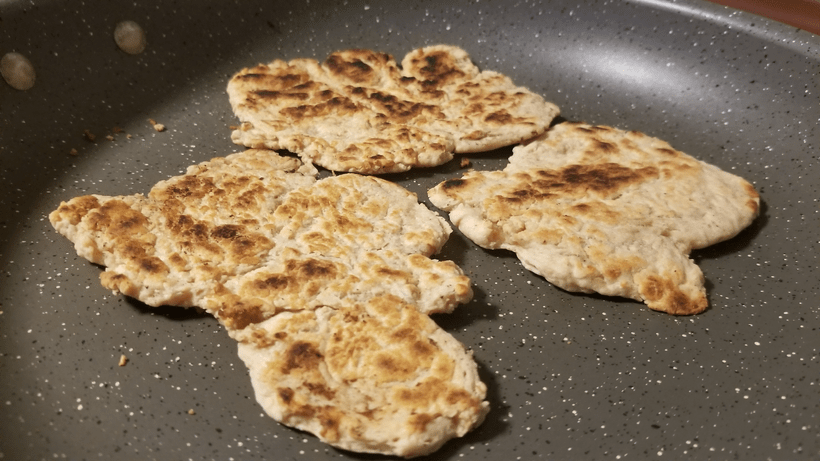
Fig. 6. And those decisions included trying to cook them on a skillet. (It was an adventurous evening.)
Add your wet ingredients to your dry ingredients and mix until it forms a shaggy dough. If it is too dry and won’t incorporate all the flour, add an additional glug of rosewater.
Put a layer of nonstick parchment paper on a baking sheet and dot VERY SMALL spoonfuls of dough on it (each perhaps the size of a large grape). Apply another layer of parchment paper on top of the dough balls and carefully squish each one flat with the bottom of a glass, your fingers, a fork, or some enterprising combination of the three.
(Or you could roll it out tortilla-thin and cut it out prior to putting on the baking sheet? BUT I HAVE NOT EXPERIMENTED WITH THAT YET.)
Under the assumption that baking between two irons was required, put another baking sheet on top of the parchment paper covering the dough splats. Do not add any weight to the top sheet, and do not ask why we feel the need to say this.
Bake for 12-15 minutes, or until they start to form a pleasant brown crisp. The finished wafers will hopefully match the smallest of the ones shown here, which was grape-sized to start and also “decorated” with “fork smooshes”:
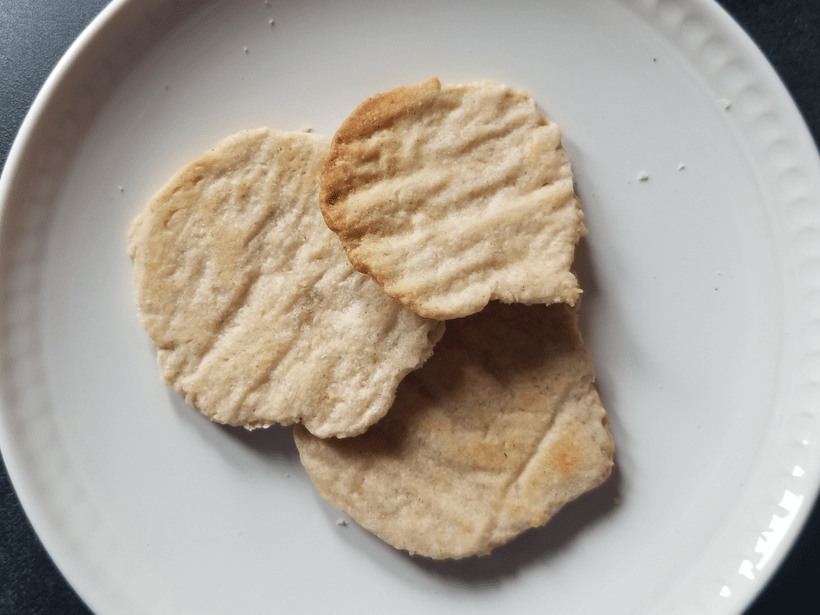
Fig. 7. Cronch.
The completed wafers should be thin, crunchy, and taste approximately like ice cream sugar cones. Having tried them in a bowl of ice cream, we can confirm that they do not soften with any speed and instead might serve very well as an edible cone or bowl, assuming we can figure out how to make it do that.
——————————
COMMONPLACES
From Italo Calvino’s Invisible Cities:
“Also in Raissa, city of sadness, there runs an invisible thread that binds one living being to another for a moment, then unravels, then is stretched again between moving points as it draws new and rapid patterns so that at every second the unhappy city contains a happy city unaware of its own existence.”
******
From @angrycomics (Jessica Hayworth), December 18, 2012:
you can decide whether other people feel good today and you should probably be gentle with that decision
——————————
ANNOUNCEMENTS
While no patrons have as yet provided names that can be listed as public thanks here, there are several persons on said tier who should receive said appreciation– and so I shall, for the time being, provide them noms de mécène of exceeding cleverness:
Many thanks to Gentle Readers Erste, Sekund, Terzo, and Quartus for your continuing support!
******
If you would like to write a letter to be produced/answered in the magazine, please email me at minor.hours.magazine@gmail.com with the subject line:
Letter to the Magazine: [subject of letter as you would like to see it printed]
If you wish the letter to be anonymous or under a nom de plume, please state so in the body of the email; similarly, if you’d rather not be printed at all, please also state so in the body of the email. It will otherwise be assumed that mail sent to that address is intended for print.
Alternately, commenting on this post will get you a similar result, with much less fuss.
******
-Until next time, be safe.
Discover more from Katherine Crighton
Subscribe to get the latest posts sent to your email.
 Katherine Crighton
Leave a Reply