
(Part 2: What It Means to Leave, and to Be Left– But Also to Come Home Again)
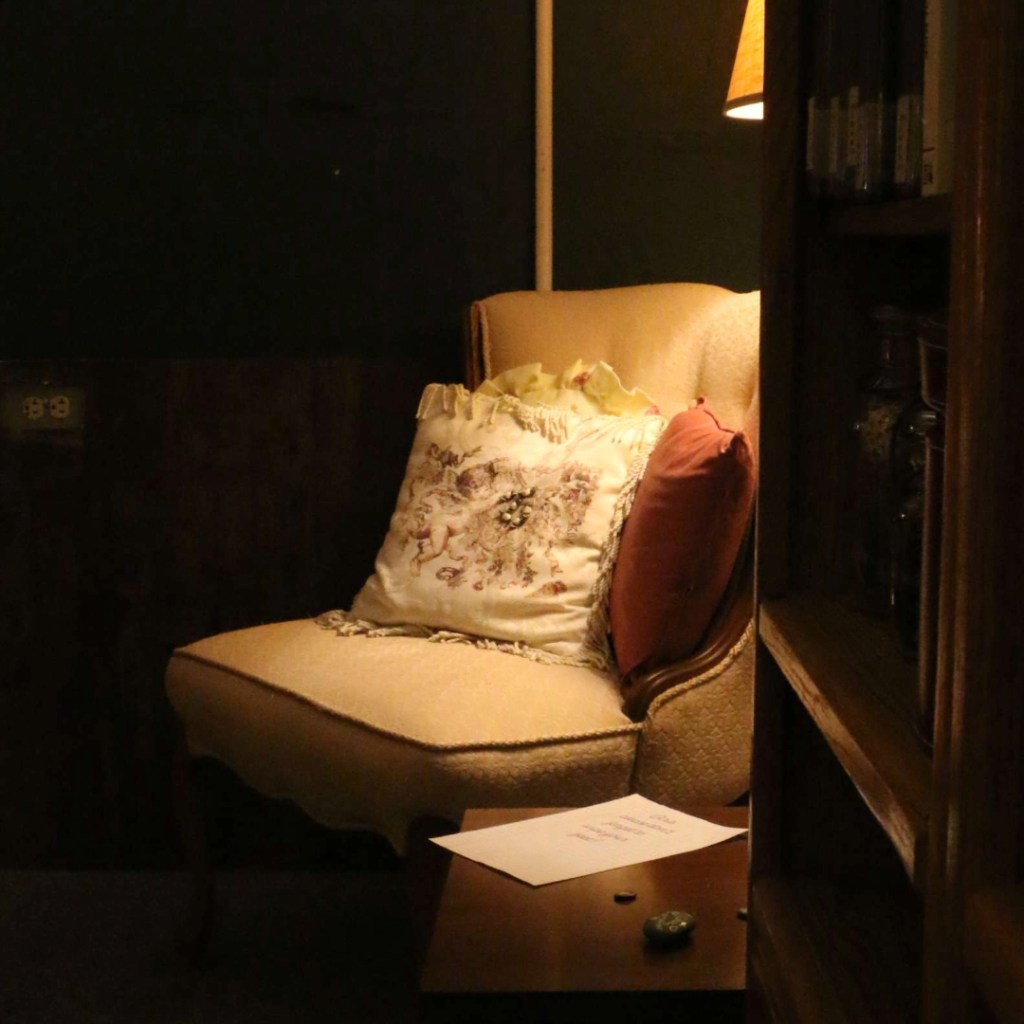
Fig. 1. A seat. A room. And stones. (Room design and photography by Hannah Belan)
1. Interactive Media and Game Design
It doesn’t roll easily off the tongue– not least because it’s the name of the MFA degree that’s housed within WPI’s Interactive Media and Game *Development* program, leading to sometimes awkward dances around which title should apply to which activity– so it’s very helpful, really, that we all usually just refer to it as IMGD.
In Part 1 of this essay, I talked about the road that brought me to this, the end of my second year in the IMGD MFA program. And I’m going to finally confess here: I’m loving it. Against all my expectations and despite definitely not liking games, I’m learning new and fascinating ways of approaching concepts of art and audience; I’m being shown new tools for storytelling; I’m having new terminology introduced to me that helps me finally outline in sharp relief concepts what I had only been able to describe in hazy approximation up till now. (Ludonarrative consonance, my beloved.)
It’s difficult to not make this sound pat, but– the educational part of my MFA experience, the one I thought I was most likely to judiciously edit or outright ignore, has been, quite sincerely, a revelation.
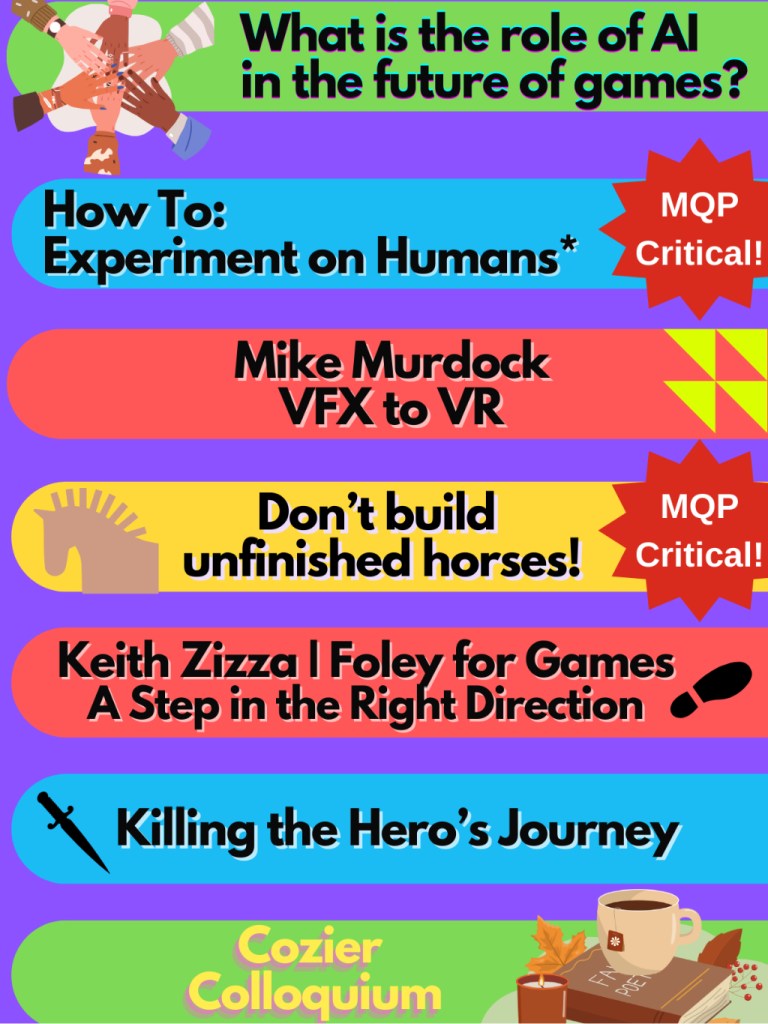
Fig. 2. If you, Reader, try to tell me you’re not interested in at least one of these colloquia,
then send me your home address so I can take a day off work, put on some roadtrip tunes,
roll up to your front door, invite you out for a cup of coffee, tenderly take your hand in mine,
and call you a liar to your face.
But beyond that… there’s something about the people in it. Not just the students– the faculty, too. The alumni. Even the industry connections, often just friends who are happy to do what they can to send the elevator back down. There’s a palpable ethos weaving through IMGD’s workings, repeated over and over like a pattern of open doors and joyful welcome. Student engagement in non-required events is often above and beyond what I’ve seen in other majors; the class years mix, graduate and undergraduate, the students investing more in the community (and their identity as IMGD majors) than in some ticking clock of credit hours; the faculty are not only approachable, but seem just as eager to help form– and be part of– this conclave of creatives, collaborating not just on projects but on really creating the kind of space academia should be– where the value (and, perhaps, pressure) of an education is not applied to checking requirements off a list, but in the… well, the joy that learning something new can bring. And, too, the joy that can come with sharing some new, wonderous thing with someone else.
It reminds me of a lot of things, usually, all good. But today, in particular, it reminds me of–
2. INTERRUPTION! YOU MUST GO ON A BRIEF SIDEQUEST TO GAIN IMPORTANT INFORMATION
Look. Because of that whole “I don’t know how to talk about pursuing an MFA” thing, it may come as something of a surprise that for brief intervals during the early months of this year– and then full-throttle from the start of April until this very moment– I have had the privilege to be part of an IMGD student project called Memoirscape, conceived and spearheaded by PhD candidate/director-producer Kathleen Morrissey and MFA candidate/art director Hannah Belan; a project whose explicit purpose is to, as Kathleen has described it, lower the threshold for players to enter into and then– at their own pace and to their own chosen level– learn how to engage with the vibrant, often powerful artform of immersive experiences.
Nota bene: “Immersive” is a wibbly wobbly sort of word, frequently used but not particularly useful when it comes to evoking the actual nature of whatever art or medium it’s being applied to. While technically everything we do is immersive (I am, at this moment, immersing myself in this clicky keyboard and this too-bright screen, and later I will immerse myself in Star Trek reruns with a large container of ice cream that is sure to immerse me in maple walnut), there is clearly some kind of elephant we are all patting blindly at, describing a snake here, a fan there, a tree-trunk, a wall– knowing that there’s something standing right in front of us but with too few hands at work to reason out the shape yet.
In publishing, we sometimes use comps to get around that pesky “I’m not sure what this is but it’s definitely A Thing” issue, and for Memoirscape, I would suggest that the closest comps are the various explorable, otherworldly Meow Wolf installations– or, more generally, the palpable difference between a mundane parking lot and the explorable, constructed space within a theme park. Both of those can be hard to come across without prior planning, though, and so often the more easily accessible ahem, available kinds of immersive experiences– such as “escape room” environments that are predicated on being trapped within a high-stakes, high-tension situation– end up being the only reference point new players might have for this emerging art form… and then, subsequently, come to the conclusion that it must not be something “for” them.
Surprise surprise, though– ticking timebombs and forced collaboration in stress-inducing environments are not everybody’s idea of a good time. Which is okay! There should be lots of different kinds of experiences for lots of different kinds of people! But as Kathleen and Hannah hammered out together in the early months of 2024, with input from Kathleen’s advisor (and narrative & acting director) Melissa Kagen, there were plenty of experiences available for the time-based thrill seekers… and a whole lot of not much for everyone else.
With feedback from the writing team of fellow IMGD students Renee Cullman, Mia Mueting, and Maddie Veccia, and with narrative assists from Marisa Higgins (also on art/construction) and myself (popping up periodically to throw narrative smokebombs and vanish again into my day-job spreadsheets)– the three members of the direction team returned to an idea previously considered, but discarded, for the Fall 2023 course (taught by Prof. Kagen) on designing interactive experiences we’d all taken together:
Creating, somehow, a cozy escape room.
Fig. (sort of) 3. This is not a cozy escape room.
You have to understand, coziness is a really tall order for anything that could fall within the recognizable “escape room” genre. The discussion of cozy fiction is one of keen interest in SFF at the moment– it’s even appeared in this year’s Readercon program as a panel that I will absolutely be staring at with hungry eyes from the audience’s front row.
Meanwhile: Tilted at an angle and providing interesting opportunities for triangulation comes the topic of cozy games, with “coziness” defined as the strength at which a game “evokes the fantasy of safety, abundance, and softness”– all very much at odds with the basic mechanics of an escape room.
So I’ll be absolutely honest with you– if it had been me alone writing this whole thing up… I wouldn’t have tried it. I have a reasonable instinct for writing unsettling, distressing, and horror-level unreality, and there’s definitely pride to be had in the craft that goes into finding and pulling that particular lever in an audience’s hindbrain– so if it had been only me, somehow developing this experience while siloed from the team, I know I wouldn’t have made that leap from “escape” to “cozy”. I would have stuck with what I know I’m good at.
And it would’ve been a mistake for many, many reasons.
3. HUZZAH, YOU HAVE SUCCEEDED IN THE SIDEQUEST AND EARNED: SUDDEN MEDIA ATTENTION (AND OH NO FEELINGS)
While I’ve linked to bits and bobs related to interviews on the making of Memoirscape and its Fall-semester incarnation, Home for the Holidays, the team was delightfully surprised when an attendee of the Foundations of Digital Games 2024 conference, at which Memoirscape had held a live demo, contacted us to let us know they’d played the game, enjoyed it, were intending to write a review of it for Eurogamer‘s curated Pride Week 2024 collection, and would we be available to answer some questions about the project? (The answer: thank you very much and yes.)
The finished review, “Open door policy: can an escape room be queer?“, posted this morning, and it introduces the reader into Memoirscape with this description:
We’re in a teen bedroom – the exact location and date is a little hazy, but it’s somewhere in Queens, New York City, in 1986. All the hallmarks of adolescence are here, posters on the walls, a brightly covered duvet, knick-knacks. The space is bathed in warm light. I sit down on the bed and pick up a romance novel left nearby. It’s comfortable, one might even say cosy, but we’re not alone. Another group is huddled around a cassette player, listening to a recording of a private conversation between two young women. When I look closer at the photographs on the walls, some of the faces seem to be crossed out.
The rest of the review discusses the queer love story threaded through the experience, which makes sense for a Pride Week article, though there are absolutely other threads that could be teased out if one were so inclined.
(There is, for instance, the matter of a maternal death that is lightly hinted at, just for a moment, and it’s not a thread I added but it’s definitely one I had to stop myself from tugging at too hard, because that’s not the team’s story here– but I digress.)
There’s this thing, when interview questions are sufficiently (excellently) open-ended, where the question can become less of a request for specific information and more of a prompt for lengthy retrospectives, sudden introspection, and, maybe, possibly, crying on your keyboard. (BUT ONLY POSSIBLY.) After it was all said and done, I was actually very pleased with my responses– which for my own records, and for any completionists/archivists in the crowd who don’t mind spoilers, can be found by clicking this wee arrow:
more post-mortem history than you can shake a stick at
[The team’s choice of a queer love story for Memoirscape] was a combination of circumstance and serendipity; WPI’s IMGD program has a vibrant community of queer students, myself included, and so the development of Julia Adler, the main character of the story, into a young lesbian in 1986 was a definite “write what you know” moment spearheaded by writers Maddie Veccia and Marisa Higgins. But in the dialogue written for Julie and her teenage girlfriend, Steph, an unnamed book was referenced, and so as part of my narrative consult I asked whether that book could be Annie on My Mind, a groundbreaking queer YA love story that came out in 1982. (The answer was an emphatic yes.)
At the same time, we were also still looking for the heart of Adler’s personal journey, and there were a lot of things it could have been– reconnecting with family, accepting grief, even self-harm in the name of science– but we hadn’t settled on which exactly we should drive at. I’d read Annie years ago, but hadn’t revisited it; as I started digging into the book to make sure it still fit within our cozy gameplay, I discovered connection after connection with not just the characters our students had created, but our larger worldbuilding as well. After that, choosing to make the main thrust of Memoirscape be the love story between Julie and Steph, and the persistence of memory fueled by that love, felt like being given the key to a door we hadn’t realized could be opened– and when we did, we found ourselves someplace more beautiful and full of feeling than we could have ever imagined.
[The iteration of the escape room design] was a big topic of discussion! Memoirscape is a testament to iterative design. The original version of the room was developed in Prof. Melissa Kagen’s “Design of Interactive Experiences” course in the Fall of 2023, where a class of 30-ish students collaboratively designed a more traditional sort of escape room, also set in the ’80s, called “Home for the Holidays.”
Setting the playspace in a recreated home was part of a pitch from Maddie, Renee Cullman, Mia Mueting, and Liv Bell– elements from that pitch that survived into the final “Home for the Holidays” include a family in a time loop, an eerie setting that breaks from the norm, a longing for nostalgia, a puzzle on the home computer within a retro game, puzzles hidden in everyday objects (such as coasters), actors that are intended to engage with the players, and subtle cat theming. What didn’t survive, at the time, was this key line: “More of an immersive experience than an escape room.”
“Home for the Holidays” was incredibly successful, but there were elements that Melissa, artist and room designer Hannah Belan, and Melissa’s advisee, Kathleen Morrissey (later Memoirscape’s producer), felt could have been iterated on further– particularly with regard to the concept of cozy gaming. I’m sure Kathleen could speak to this more thoroughly, but when several of us were approached and asked if we wanted to try and revise the Fall room for a submission to FDG in the Spring, there was a definite direction that the revision was being aimed toward– specifically, lowering the threshold for new/uncertain players and upping the elements of safety, abundance, and softness, as defined by Project Horseshoe’s cozy game manifesto).
While I agreed to be part of the team, I’m also the operations manager for the Computer Science department, so unfortunately much of the early Spring planning and development happened while I was unavailable. I recall that the shift from puzzle- and time-driven action to immersive coziness was a difficult one to land; it might have been easier to either have a purely immersive experience set in 1986 (thanks to Hannah’s immaculate palette and sensibilities), or a purely puzzle-driven escape room, but the collaboration point was one that, by the time I was able to return to the project more thoroughly, was a teetering balance between the two: a cozy room that led the player on the journey from 1986 to a memory lab to a professor’s office… but with no underlying drive to do so, or catharsis for having completed the circuit.
I had recently attended Punchdrunk’s Sleep No More for the first time while simultaneously reading Henning Nelms’s 1969 handbook Magic and Showmanship, and came away from both with a greatly expanded appreciation of asynchronous storytelling through ephemera (what Melissa has called “archival adventuring”, I later found out) and the importance of defining and directing the role the audience plays inside an interactive experience. I had created paper ephemera for “Home for the Holidays” (including an evil-professor motivational poster, several sticky notes, and paper trash such as a to-do list, a set of marked-up IRB requirements, and an appalling syllabus) and had originally thought I was going to do similar theming and world-strengthening ephemera as a sort of polish-pass through Memoirscape. However, with deadlines approaching from all sides, and the established puzzle mechanics (as built/programmed by the extremely talented Cumhur Onat and Samin Shahriar Tokey) and cassette dialogues (already written and performed by theatre students under Prof. Sarah Lucie) as limiting factors, this issue of drive and catharsis was one I was determined to overcome by really knuckling down and dealing with the narrative–which is how my “narrative consultant” title actually came into being.
[ETA 8/22/24: Credit to the following performers! Young Julie Adler: Olivia Simon; Lillian (Grandmother): Nick Smith; Sean: Kweku Akese; Robert Adler: Chase Urban; Erin Adler: Ella Hughes; Stephanie Palmer: Axe Kiraly; TV News Anchor: Ricardo Croes-Ball. The team who helped with props includes: Ricardo Croes-Ball, Kanik Hollan, Julian Mendez, Adrienne Saucier, and Eric Zhong!] [ETA 7/11/25: I’m still digging out credits: find the ongoing list, along with contact links where available, under the read-more details arrow here!]
As recommended by Nelms, I went through the entire run of the experience multiple times with different members of the team and marked those places where a player might question, stumble, break suspension of disbelief, or lose interest. In those places I either added ephemera (such as the series of experiment notes in the lab, the multiple inscribed copies of Annie on My Mind, the participant survey, etc.), or I pitched mechanics to the team (such as the use of blank stones in the room that were marked and returned to “replace” missing memory– and provide a way for players to see their and others’ cumulative mark on the evolving story of Julia Adler). The team got into the swing of it, too– Melissa suggested the multiple endings, while Maddie and I had an amazingly synergistic meeting that led to the concept of the only “bad” ending being that the love story isn’t an immediate happily-ever-after for our characters, and Shubham Sharma (the voice and developer of the Evil Professor character in “Home for the Holidays”) brought his fantastic character-work to bear to really develop and flesh out the TA. Our guiding principle, however, stayed Kathleen’s beautiful ideal of an experience that could be a safe and cozy one for players that are otherwise excluded from the more antagonistic escape-room-style interactive experience.
When we opened in early May to public play ahead of FDG, we were on tenterhooks as to whether players would actually push beyond the room (though they explicitly didn’t have to)– and if they did, whether they would come to the end of the narrative and feel the “cozy” completion that we were envisioning. When the first painted rocks were deposited in the room, I remember texting several team members with a photo and the heartfelt words “The room works. They’re leaving stones.” (Which I suppose you could also call the start of my archival work too.) But we weren’t done iterating– we had thought, briefly, of not having an actor in the 1986 room, but after some early bumps with guests uncertain how to play in an untimed space and multiple groups of people at differing levels of potential puzzle solving, I suggested the role of the Admin, a middle-ground character who didn’t have the apathy of the TA or the distance of the Professor, but rather existed purely to assist players, praise their efforts, and ambiently record their experiences… largely because that’s what I consider to be my job in real life as a high-level administrative assistant, and it allowed me to essentially play myself inside the room for the bulk of the public play (and the demo period of FDG!).
I would consider the addition of the Admin to be the last major change and the completion of the core experience– though, since we continue to iterate, who knows if there might be some new astonishing development around the corner.
[Regarding the future of Memoirscape and any plans to maintain an archive of the experience or the space:] We’ve actually successfully lobbied to keep the experience intact until WPI’s Arts & Science Week, a showcase period for the School of Arts & Science in September– and so in the meantime, we’ve reopened Memoirscape (in honor of Pride Month!) for both the kind of experience you had and a series of more experimental play styles, including room-only 1986 movie nights and remote, digital playthroughs via Zoom, with first-person-viewpoint camerawork and the ability to interact with live actors.
With regard to an archive, we have tentative plans to create a dedicated site for Memoirscape in the style of an academic “lab” website, keeping up the illusion of Julia Adler’s professorial career at WPI. It would be an ideal place to keep our extensive photo and video collections, as well as additional Easter eggs and what we hope will be several academic articles, since the participant surveys we received (now in a binder over an inch thick) and the live documentation of guest play has led to a treasure trove of potential research topics we’re eager to dig into. And, of course, we’ll be keeping all the painted stones– to do otherwise would be a disservice to the story and to our players.
Finally, if I have my narrative way, there’s of course the third and final part of the trilogy… but that’s something to keep an eye out for in 2027.
[Regarding any favorite memories of working on the project:] I think my favorite thing about working on Memoirscape has been the absolute honor of watching and interacting with the audience as they transition from ‘guests’ to a variety of different characters: puzzle-driven players, scientific participants, secret accomplices…and, ultimately, simple helpers, stepping outside of the antagonism of designer versus player and into the immersion of one human helping another (even when one of those humans doesn’t technically exist).
One of my most deeply held artistic and personal themes is recognizing, and helping others recognize, what I call “the unbearable beauty of humanity”–those moments when we realize that despite every terrible impulse the media (or even our own dark thoughts) might suggest is the normal drive of humanity…despite all that, we’ll share food with strangers, comfort scared children, tell stories to one another to explain away the dark– and we have done so, and in remarkably similar ways, since before we could strictly be called “human.” So I am completely serious when I say that it is an intense honor for me to both create that moment for others and to be present when they realize that they themselves are beautifully human too.
I have seen the moment someone realizes what it means to have brought a rock, painted with a message or thought of love, back to the half-forgotten memory of 1986, because they’ve learned that that’s how they can help Professor Adler return to herself… and upon reentering the room, suddenly recontexualizing all the other painted rocks they’ve seen since the beginning of the experience, changed in a second from anachronistic mystery to a tangible history of every other person before them choosing, over and over, to help– with no explicit promise of a reward or an escape, because they were never locked in to begin with.
(They could have chosen at any point to stop and leave the Adler in her dark office. And over and over again, person after person didn’t. They chose to help. They all chose to help, with no way of knowing what difference it would make– only that it was the right thing to do.)
…There is a visible, still moment that I have seen come over a player when they make that realization. It’s been my privilege to witness it. And it has been my privilege, with this team, to have had a part in creating it. That, I would say, is my favorite memory of Memoirscape.
…but otherwise, skip it. I want to focus in on something in particular.
4. The Unbearable Beauty of Humanity
I am going to describe a mechanic of Memoirscape to you which will– if you did in fact skip the history provided above– spoil a rather large reveal.
(But on the other hand, you’ve made it this far. You’ve seen the photos of the room I’ve added both here and in part 1. You’ve seen the stones. Maybe you’ve even wondered what they mean. Maybe you saw them, but then hurried on, unaware that there might be any meaning to be had.)
If you choose to leave the cozy warmth of our 1986 and follow the breadcrumb-path to Dr. Adler’s office, you will find a woman drawn close to a desk dotted with stones– some painted, some plain, some piled into compulsive cairns that the doctor makes, over and over; but she will only look blankly at you when you ask her if she’s all right.
There is also on that desk– among paint pens and blank stones she might push toward you with uncertain eyes– a letter from her long-lost love, Steph, dated just a month ago. She’s reaching out. She wants to help, even if the only way to do it is to shout into the void and hope to god she hears an echo.
(A sentence in it reads: “Our memories are sometimes heavy, and hard, and sit likes stones inside us.” Which you don’t need context for, really. I just needed you to have read it.)
The important thing here is you are being asked, over and over, in multiple ways, if– to help Julia Adler become whole again– you will take a stone you paint with love and return it to that memory of 1986.
I can’t really predict what you would do, dear Reader. But I can tell you– as I told the interviewer– the thing that was (before this morning, before I realized what had happened) the most important part of Memoirscape for me:
One of my most deeply held artistic and personal themes is recognizing, and helping others recognize, what I call “the unbearable beauty of humanity”– those moments when we realize that despite every terrible impulse the media (or even our own dark thoughts) might suggest is the normal drive of humanity… despite all that, we’ll share food with strangers, comfort scared children, tell stories to one another to explain away the dark– and we have done so, and in remarkably similar ways, since before we could strictly be called “human.” […]
I have seen the moment someone realizes what it means to have brought a rock, painted with a message or thought of love, back to the half-forgotten memory of 1986, because they’ve learned that that’s how they can help Professor Adler return to herself… and upon reentering the room, suddenly recontexualizing all the other painted rocks they’ve seen since the beginning of the experience, changed in a second from anachronistic mystery to a tangible history of every other person before them choosing, over and over, to help– with no explicit promise of a reward or an escape, because they were never locked in to begin with.
(They could have chosen at any point to stop and leave the Adler in her dark office. And over and over again, person after person didn’t. They chose to help. They all chose to help, with no way of knowing what difference it would make– only that it was the right thing to do.)
…There is a visible, still moment that I have seen come over a player when they make that realization. It’s been my privilege to witness it. And it has been my privilege, with this team, to have had a part in creating it.

Fig. 4. No longer foreshadowing, but brought back again and given sudden meaning.
…You could stop reading here, if you want. You have that choice. It won’t be the complete story, but it might be a safer one.
No? Then hold out your hand. I need to give you something from Dr. Adler. (And from me.)
4. On Grief, and Change, and Memory, and Stones
There is no true “bad” ending for Dr. Adler. The worst that will happen is that it might take a little longer for her and her long-lost love to reunite. I don’t think a “cozy” story can have a truly bad ending, because it implies that a player’s action– or inaction– has the ability to create an immutable harm that stretches out even beyond the boundaries of the gameplay– and once the player realizes that, then there can be no true safety (of choice, if nothing else) felt while playing.
The fantasy of the cozy game, for me, is that there is no action we can take that will create a consequence too great for us to master.
And I have kept you here, reading this entire thing, just so I could tell you this:
In August of 2020, I reached out to my mother over email. It was a tentative reaching out, in a year that seemed to beg for such– and it was after many previous years of holding back, keeping apart, until I was settled enough within myself to reconcile what I could of our past and forgive the rest.
I was ready, though, in 2020. I missed her. It was going to be hard, and I didn’t know how we would fit together after having been jostled apart so long, but– it finally felt right. We were going to see each other again, as soon as it was safe to do so. The first step had been taken.
In October of 2020, she had a heart attack. It was sudden, and it was over.
She was a writer. So, so much of what I know, I learned from her. Writing, yes, but also– she was a doctor too, like Adler. I know that the way I research comes from watching her. I know I got from her the joy that learning something new can bring. And, too, the joy that comes with sharing some new, wonderous thing with someone else.
(She would have loved IMGD.)
This morning, while thinking about Memoirscape and its core of sadness that we let players find, and sit with, and (I think) help heal from too– I remembered a flash story I’d started over a year ago. About getting the chance, even in a grimdark future that everyone should try and fight against, of seeing my mom again.
I remember when the idea came to me, and how I’d pulled out my phone in a darkened parking lot and tapped out the broad strokes of the story; how the emotions I felt in that moment (grief, love, guilt, stones) was the most important part of it, the thing I had to get right somehow, because as certain as I was that I could polish up basic prose without much effort, I was not at all confident that I understood enough of what I was feeling to even capture a pale mimic of the hurting-hope rising beneath my ribs.
But this morning, I reread that hasty note again. And– it was there. That feeling, not unknown this time, but named, and painted faithfully in words that made it work. I recognized it, this time. (It matches what I feel exists sometimes when I remember the heart of Memoirscape.)
The story, I think, only needed a couple of introductory paragraphs to complete it. I remembered that I had a file somewhere with a later draft, the note expanded-on as I’d originally planned. I opened the file, wondering if I would somehow like whatever was in there even better–
And… yes, I had expanded it. I had added descriptions, turns of phrase, breaths and pauses and discordant rhythms. All technically very accomplished tools to create unsettling, distressing, and horror-level unreality.
But I had choked out the feeling of the original draft, lost under serviceable party tricks. The thing that was most important– the real part, the reason for writing– was gone. Buried under show-off prose, that grief-hope sunk out of sight, missing from the page.
I looked at this revision, knowing that a few short months ago I would have been satisfied with it, and I was struck by the visceral realization that something fundamental to my understanding of myself and my abilities had, in these short few months, changed.
I am not the writer I was three months ago. And I am better for it. It is very clear that my time here, in this place, with these people, in the safety, softness, and abundance they all strive so hard to cultivate, has been giving me the space and tools to really, truly grow.
[And ETA 8/22/2024: I did edit that story again, with what I learned from my experience in Memoirscape; now titled “How to Win Against the Robots,” it was bought in late July on its first submission and will be appearing sometime soon from Lightspeed— the first story I’ve sold since 2020.] [ETA 7/15/2025: Here. I hope I did it justice.]
My mom is gone, but I learned today that I don’t have to lose my memory of her too. How many other MFA programs can give you that?
Open your hand.

Fig. 5. A player’s stone left inside the safe, warm walls of Memoirscape.
Discover more from Katherine Crighton
Subscribe to get the latest posts sent to your email.
 Katherine Crighton