
——————————
SOME EDITORIAL NOTES
I have spent some small amount of time adding tags to the previous issues, corresponding to the most common article types. Is there an easy way to access these tags? Who knows. Is there a list or cloud somewhere? Only time will tell.
——————————
LOCAL WANDERINGS
Last weekend I visited the Harvard Museum of Natural History with several other very clever people and saw The Ware Collection of Blaschka Glass Models of Plants–or, as they are colloquially referred to, the “Glass Flowers”. It’s a deeply gorgeous collection of carefully crafted and maintained models of flowers, flower parts, and molecular structures, all originating from a father-son team in the 1800s, and very much worth the price of admission to this otherwise small museum.
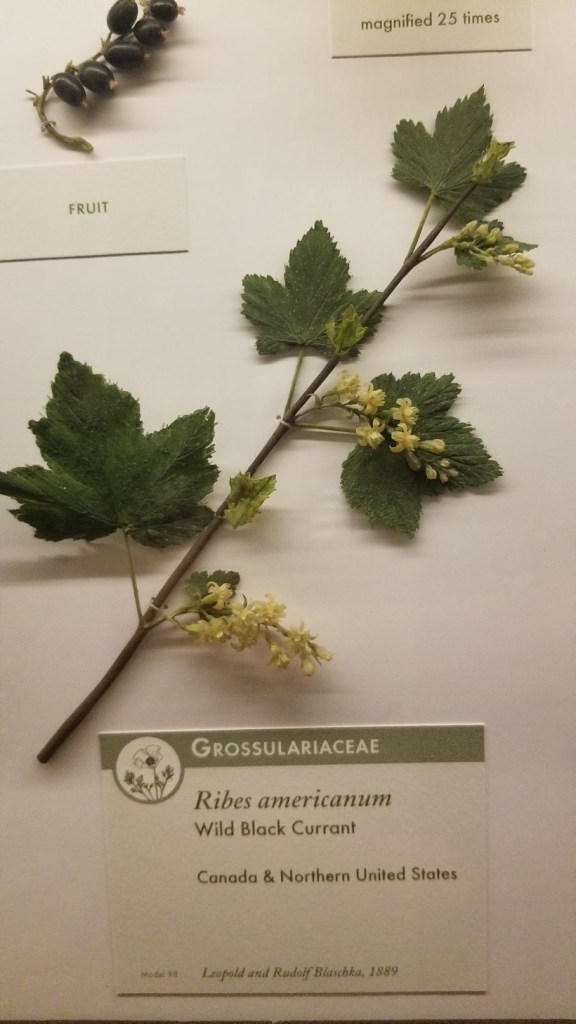
Fig. 1. A glass rendering of Wild Black Currant by Leopold and Rudolf Blaschka, 1889.
Includes flowers, leaves, bark, fruit, and a sign indicating that the Editors failed to capture a magnified portion of the plant.
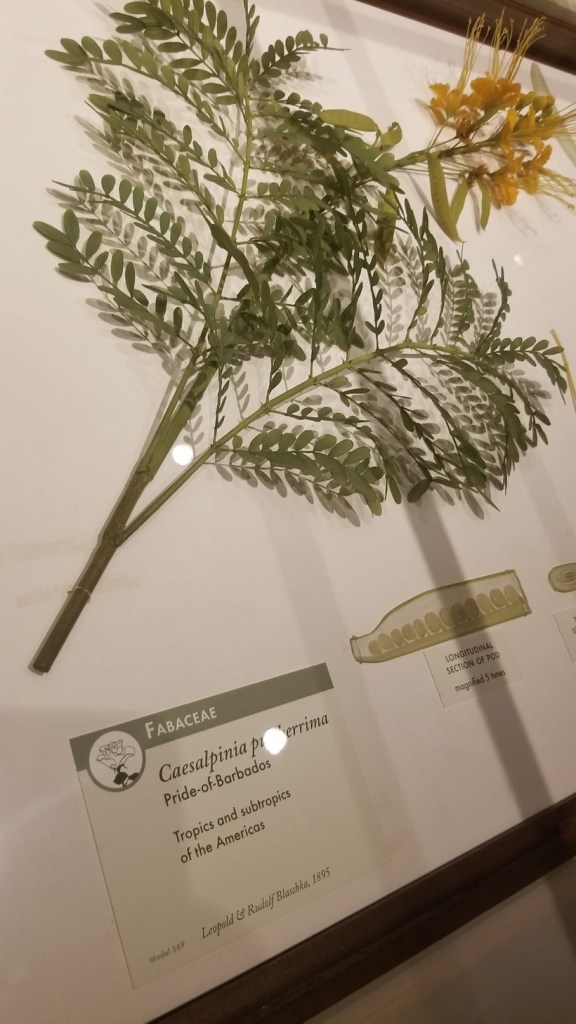
Fig. 2. A glass rendering of Pride-of-Barbados by the Blaschkas, 1895. Includes flowers,
leaves, bark, tiny sticky out bits, and a magnified, longitudinal cross-section of a pod. What pod? The pod. Shh.
I had previously seen the Blaschkas’ work at my beloved Mystic Seaport in the “Spineless” exhibit of glass marine invertebrates, and I was pleased to see that the Harvard museum also had some of their invertebrates on display– along with a short video regarding the restoration work (which, to those in academia, contains the deeply familiar hilarity of attempting to get different departments to actually provide a useful inventory of their archived stuff, and the Revelations that come thereafter). The two things that most enamored, me, however, were the gorgeous glass-faced cabinetry displaying the flowers (which reminded me of the bookcase my aunt’s childhood bedroom had, mimics of which I intend to populate my future home with), and–
In both the Mystic and the Harvard exhibits there was a single, small cabinet dedicated to the bits, bobs, tools and craftwork of the Blaschkas– and these are, in my opinion, insufficient.

Fig. 3. Look at this ceramic mortar and pestle. Isn’t it lovely? Why is there not
an entire gallery displaying this triturational wonder and its brethren? Why isn’t the gift shop
filled with loving recreations that I can make my own? How long will this injustice continue?
Apparently there is coming soon an exhibit on sea monsters, which again seems more up Mystic’s alley, but nonetheless something I look forward to seeing– not least because the gift shop offering for that might be very worth my while indeed.
——————————
ALMANAC FOR JUNE-JULY
The weather inside my apartment continues hot but not unbearable, helped by a combination of small fans pulling cooling air from the outside and multiple black-out curtains set up to prevent the greenhousing of my home.
I do of course own multiple air conditioners, and I could put them in, but I am now playing a complicated game of chicken with the summer temperatures, the rules of which are: (1) the longer I can hold out against creating the Electrical Bills of Doom, (2) the more I am somehow “winning”.
It is unclear what stakes Summer has in this game, but it is certainly not above cheating. My laptop, for instance, does not appreciate that I’m holding out; I suspect they are in Cahoots.
——————————
A RECIPE FOR THE OVERHEATED
1 pinch baking soda
2 cups boiling water
6 tea bags, cheap black variety
3/4 cup white sugar
6 cups cool water
Add a pinch of baking soda to the bottom of a large pitcher. Pour in boiling water. Realize that the 6 tea bags ought to have been tied into a sort of sachet d’épices prior to pouring the water. Do so immediately, vowing to write the directions correctly for the magazine. Add the tea bags. Cover, and let steep for 15 minutes. Remove tea bags using the extra long string you definitely remembered to include. Stir in sugar, pour in cool water, refrigerate. Tastes extremely well, particularly at hours of the night when it ought not to be drunk.
——————————
SOAP: FIT THE FIRST
It was 2022. I had attempted, and conquered, the 1711 recipe for lip pomatum.
It should be said at this point that a large portion of my inspiration came from watching a certain pirate show set in 1718, and during the course of said show there was the mention of exactly one household good: lavender soap. It therefore seemed natural that my next step toward apothecary tomfoolery was to find a recipe for lavender soap and master it as easily as I had the pomatum.
Gentle reader: I have been on this soap journey for two years now.
And if this is my madness, then by god, I shall make it yours as well.
To start us off: There are three things you need to know immediately about this supposed 1718 lavender soap.
1. It probably wasn’t completely “lavender” scented.
The majority of the extant recipes for scented soaps in and around Europe didn’t really do “single” scents– it was usually a fun mix of herbs, spices, resins, and unfortunate animal parts, with a base scent of one or more floral waters and oils.

Fig. 4. Regarding animal parts, please meet the musk deer; or, Sir Not Appearing In This Recipe;
or, “quick boys, get its semi-viscous-secretion-filled exocrine glands, we need ’em to smell fancy.”
As an example of one of these recipes, Sir Hugh Plat’s 1602 recipe in his Delightes for Ladies required orris root (dried and powdered iris rhizomes), cypress, “Calamus Aromaticus” (aka sweet flag, aka a psychotropic, hooray), rose leaves, lavender flowers (finally), and rosewater. This big mix of yummy smells, common plants, and very very expensive and imported ingredients is fairly in keeping with most of the scented soap recipes I’ve been able to find for this time period.
2. The first step in making scented soap… was to buy some plain white soap.
So far as I can tell, all extant European recipes for scented soap are basically the household equivalent of doctoring your instant ramen noodles. Very briefly: Western soap was harsh, mostly good for laundry, soft or liquid even if salted to solidify it, was made with smelly animal fats, and wouldn’t take pretty herbal scents worth a damn. (It was also called “black soap” because of the color of the potash lye used to make it.)
But over in Syria, and brought to the rest of the Mediterranean and elsewhere via the Silk Road, was this amazing stuff called Aleppo soap– and it was golden-white, solid, gentle on the skin, almost scentless, and could be mixed with herbs and spices and icky animal parts to smell very fancy indeed.
Of course, people in the West wanted it badly because it was great, but it was also incredibly expensive, so there was Big Business in backwards engineering it– which a bunch of European coastal cities and countries with access to high quality olive oil and the ability to make soda ash (a significantly gentler cousin to potash) managed to do, including Castile, Spain, Marseilles, France, and Venice, Italy.
Soap recipes from early 1700s and earlier predominantly start with some amount of “Venetian Soap”– spellings of which might also be “Venice-Sope”, “Venise sope”, “Saponis Veneti”, etc. The goal was basically to start with a white hard soap, and Venice wasn’t the only place that had it, but it made for a useful shorthand. Other soaps that seem to have occupied the same ecological niche were “Spanish”, “Castle”, “Saracen”, “French”… and, of course, “Castile”, which seems to have become today what Venetian Soap once was: a shorthand for olive oil soap.

Fig. 5. The earliest reference I’ve found so far to Venetian Soap, from a 1558 translation
of an earlier work– though this image in particular is from a 1595 edition.
Evidently, Step 1 to modern recreations of 1710s lavender soap was “buy some very fancy olive oil soap.”
But before that, one last fact needs to be revealed…
3. The finished, scented soaps were called WASH BALLS.
Yes, some recipes were just called “a white sweet Soap” or “a muskified Soap”– but the majority were labeled “a delicate washing ball”, “washing balls”, “an Excellent Wash-ball”, “Perfumed Wash Balls”, etc.
(I feel fine about this. I do not giggle when discussing it. I do not waggle my eyebrows and lower my voice when offering to show them to others. I am at all times very mature.)
So far as I can tell, they were called wash balls because the remade Venetian soaps were typically, well, spherical, for reasons that are mostly guesses on my part but amuse me anyway. For size reference, though, “little” balls were listed in 1706’s Bate’s Dispensatory as being about 2 or 3 ounces in weight, so we can imagine a regular size ball as being about 4 or 5 ounces (as a reference, a bar of modern Dove soap is 4.75 ounces).
They could also, according to Simon Barbe’s 1696 The French Perfumer, be stamped with a sigil and have a delicate gold leaf applied to the raised edges afterwards to make them super fancy, and if you think I’m going to just ignore that opportunity to be So Much Extra, then hooboy, you have not been paying attention to my entire, like, jam.
With these three facts in mind, I set forth… to be continued in our next issue.
——————————
THE READING SOCIETY
One of three books that I have found to be of utmost use in my household apothecary practice, not least because Barbe believes in giving actual directions for his recipes. His method for creating paste beads and medals is one I intend to follow as a base a future project.
While I intend to dig into this resource more thoroughly, the articles I’ve read so far have been fascinating.
An online magazine with articles about interesting/unusual public domain publications. I became a member to get their postcard pack, and was not disappointed; I would pay good money for a hardcopy version of this magazine as well. If you spend any time at all riffling through its links, you’ll feel the same shortly.
——————————
COMMONPLACES
From Merrit Malloy’s “Epitaph“:
I want to leave you something,
Something better
Than words
Or sounds.
Look for me
In the people I’ve known
Or loved,
And if you cannot give me away,
At least let me live on in your eyes
And not on your mind.
You can love me most
By letting
Hands touch hands,
By letting
Bodies touch bodies,
And by letting go
Of children
That need to be free.
Love doesn’t die,
People do.
So, when all that’s left of me
Is love,
Give me away.
——————————
ANNOUNCEMENTS
I have just noticed that the masthead for the magazine has a terrible error. It was not always so. I have introduced it. It is monstrous. Dear god, don’t look.
******
If you would like to write a letter to be produced/answered in the magazine, please email me at minor.hours.magazine@gmail.com with the subject line:
Letter to the Magazine: [subject of letter as you would like to see it printed]
If you wish the letter to be anonymous or under a nom de plume, please state so in the body of the email; similarly, if you’d rather not be printed at all, please also state so in the body of the email. It will otherwise be assumed that mail sent to that address is intended for print.
Alternately, commenting on this post will get you a similar result, with much less fuss.
******
-Until next time, be safe.
Discover more from Katherine Crighton
Subscribe to get the latest posts sent to your email.
 Katherine Crighton
Leave a Reply